
A growing number of founders across the Middle East and North Africa are choosing Hong Kong as the base for their international business — a credible, neutral jurisdiction with USD and multi-currency banking, deep trade links into Asia and China, a simple territorial tax system, and a remote setup that costs HK$3,895 in government fees. Here's why, and the one caveat that stays yours.
Ask a founder in Dubai, Cairo, Riyadh, Amman or Casablanca where their trading company should sit, and the honest answer has changed over the last few years. More and more of them land on Hong Kong — not as somewhere to move to, but as the flag the business actually flies: the entity that signs the contracts, invoices the clients, and holds the multi-currency banking. It's a quiet trend, and it's a rational one.
The logic is consistent across the MENA region. Founders want a base that counterparties anywhere will recognise, that banks in hard currency, that sits close to the Asian supply chains and customers driving their growth, and that they can own and run from home without relocating. Hong Kong checks those boxes better than almost anywhere. This post details the Hong Kong side fully and keeps your home-country position broad on purpose — your local tax, residency, and any regulatory requirements are a separate question for a qualified advisor where you live. Here's the scannable version of why MENA founders pick Hong Kong.
Neutral, credible jurisdiction
A long-established, transparent common-law financial centre that clients, suppliers, and banks worldwide accept without a second look.
USD & multi-currency banking
Hold and move USD alongside EUR, GBP, RMB and more — fintech and traditional accounts built for cross-border flows.
Asia & China trade access
A gateway to mainland China and the Greater Bay Area — the right doorstep for sourcing, manufacturing, and Asian customers.
Simple, low tax
Profits taxed on a territorial basis at 8.25% then 16.5% — no VAT/GST, no capital gains tax, no tax on dividends.
Fast, remote setup
100% foreign ownership, incorporated in 3–5 working days, entirely from home — no flight, no local partner.
Global market reach
One clean entity to trade with Asia, Europe, and the Americas — a base that travels with you, not tied to one market.
The trend: why MENA founders are looking east
For years the default for an internationally-minded MENA founder was to incorporate close to home or in a familiar Western jurisdiction. That still suits plenty of businesses. But a distinct and growing group — cross-border traders, e-commerce sellers, sourcing agents, and remote service firms — has realised their centre of gravity is no longer in the West at all. Their suppliers are in Shenzhen and Guangzhou, their fulfilment runs through Asian ports, and their fastest-growing customers are scattered across several continents.
When that's your reality, the question stops being "where am I based?" and becomes "where should the trading company sit so banking, contracts, and supply chains all line up?" Hong Kong keeps coming up because it answers that question cleanly: it is close to the Asian engine of the business, neutral enough to face any market, and reputable enough that no client or bank treats it as exotic. None of this requires the founder to leave the region — you can own and direct a Hong Kong company from anywhere in MENA. If you want the honest "is this actually me?" version, our guide to who a Hong Kong company is actually right for walks through the fits and the non-fits.
A neutral, credible base the whole world recognises
The first reason is reputational, and it matters more than founders expect. When you put a counterparty's name on a contract, or hand a bank your incorporation documents, the jurisdiction behind your company is doing quiet work — it either reassures the other side or makes them hesitate. A company from an obscure or aggressively "offshore" flag invites friction; a Hong Kong company rarely does.
Hong Kong is a long-established common-law financial centre with a transparent corporate registry. There is no special secretive "offshore" vehicle to register — every company is the same standard private company limited by shares, and the ultimate beneficial owner is recorded on a significant-controllers register. That transparency is a feature: it's exactly what makes the entity bankable and contract-ready across Asia, Europe, and the Americas alike. You can verify the public framework yourself on the Companies Registry. For a MENA founder selling into multiple regions, a neutral base that no single market treats as "foreign-and-suspect" is a genuine commercial asset.
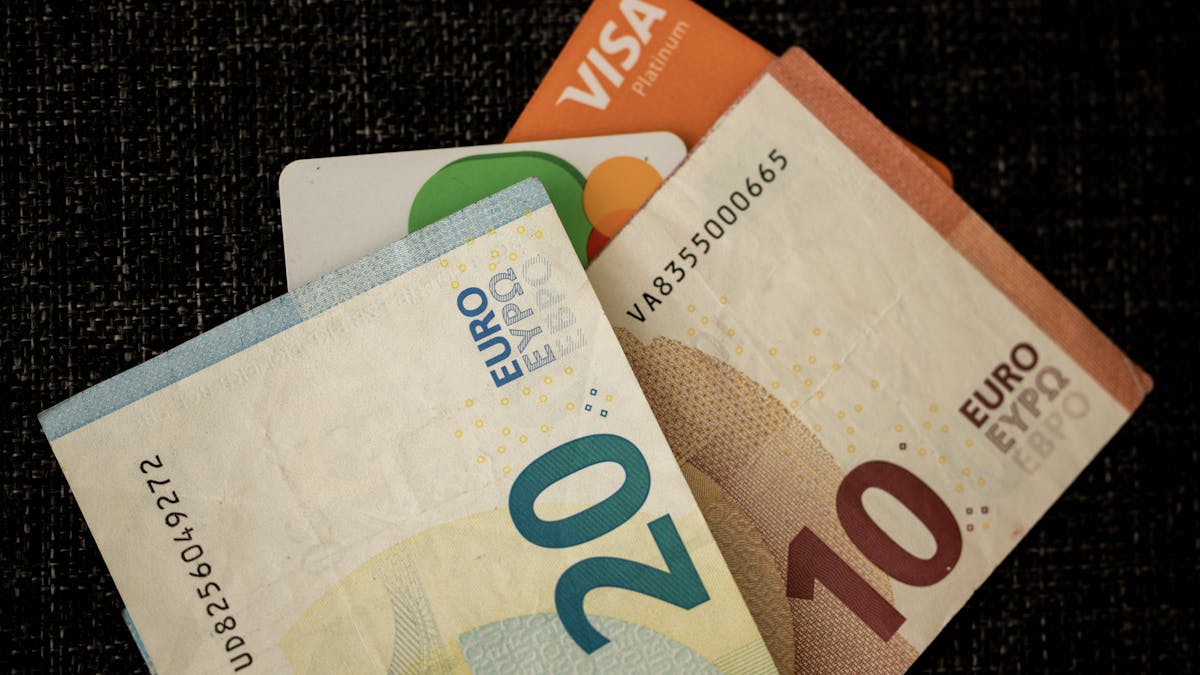
USD and multi-currency banking that actually works
The second reason is banking, and for cross-border founders it's often the deciding one. An international business lives and dies on being able to receive, hold, and pay out in the currencies its customers and suppliers use. A Hong Kong company opens the door to genuinely multi-currency accounts — US dollars alongside euros, pounds, renminbi, and others — through both the traditional banks and the digital banking and fintech platforms that have transformed this space.
For a founder collecting USD from global clients while paying suppliers in Asia, that means fewer forced conversions, tighter control of foreign-exchange costs, and a single account stack that handles the whole flow. Crucially, much of this is now achievable without a Hong Kong visit, provided the application is clean and the business is real. The work is in the preparation, not the geography: we prepare the know-your-customer (KYC) file the bank wants to see — proof of a genuine business, customer or supplier contracts, address verification, a clear picture of the money flows — and we introduce you to our digital and traditional banking partners. A well-prepared file from a credible founder typically clears in around one to two weeks.
An Asia and China gateway, on your doorstep
The third reason is geography, and it's the one a home-region base simply can't replicate. Hong Kong sits at the edge of mainland China and the Greater Bay Area — the manufacturing and logistics heartland that so many MENA-based traders and sellers already buy from. Having the trading entity in Hong Kong puts your company on the right side of that relationship: closer to suppliers, closer to the ports, and inside the time zone where the work actually happens.
For the traditional trader sourcing goods, that proximity smooths supplier vetting, quality control, and the RMB-to-USD currency flows that come with buying from China and selling onward. For the e-commerce operator, it means a clean entity that marketplaces and payment processors recognise, sitting next to the supply chain rather than half a world away from it. And because Hong Kong faces outward as readily as it faces north, the same company that buys from Asia can sell into Europe, the Gulf, and the Americas without changing its flag. It is, in short, a base built for moving goods and services across borders — which is precisely what a globally-minded MENA founder is doing.
Simple, low Hong Kong tax — and the part that stays yours
The fourth reason is the tax system, which is refreshingly straightforward — on the Hong Kong side. Hong Kong taxes profits, not turnover, on a territorial basis, and your legitimate business costs come out before any tax is calculated. The headline rate is a two-tier profits tax: 8.25% on the first HK$2 million of assessable profits and 16.5% above that, per the Inland Revenue Department. There is no VAT or GST in Hong Kong, no capital gains tax, and no tax on dividends — a short, predictable list that founders often find simpler than what they're used to.
On top of that, the territorial principle means profits genuinely sourced outside Hong Kong may fall outside the charge altogether. That is never automatic — the Inland Revenue Department examines each claim, and the Foreign-Sourced Income Exemption (FSIE) rules add nuance — but where it genuinely fits, we file the offshore claim for you. Now the honest caveat, and it's important: your home-country tax and any local requirements are a completely separate matter. Owning a Hong Kong company does not by itself settle how the country where you live or are tax-resident treats that company or its income, and rules across the MENA region differ widely. We detail and stand behind the Hong Kong side; for your personal and home-country position, confirm with a qualified local advisor where you are. That single conversation is what keeps the structure clean.
How our package works for a MENA founder
Setting up from the region is deliberately undramatic. A Hong Kong company needs only one director and one shareholder — and they can be the same person — so a single founder anywhere in MENA can own 100% and incorporate in 3 to 5 working days, entirely remotely. Two things the law genuinely requires are about the company's local footprint, not yours: a Hong Kong-resident company secretary and a registered office address in Hong Kong. Both are included in our package from day one, and we file every form on your behalf.
HK$3,895 — HK$1,545 Companies Registry electronic incorporation fee + HK$2,350 Business Registration (incl. the HK$150 levy reinstated 1 April 2026). One transparent professional fee to us on top, with no markup on the government rates.
That HK$3,895 is the public government cost — the HK$1,545 Companies Registry (CR) electronic incorporation fee plus the HK$2,350 one-year Business Registration (BR) certificate, which includes the HK$150 levy reinstated on 1 April 2026 after a two-year waiver. Beyond setup, a Hong Kong company carries a predictable annual rhythm — BR renewal, the company secretary and registered office, and accounting with an audit — which is where the real budgeting sits, and which we run as ongoing service. Our Hong Kong incorporation for foreigners page sets out what a non-resident founder needs, and our core Hong Kong incorporation service covers the whole workflow. Check the rows below before you decide it's you.
Is a Hong Kong base a fit for you? A quick checklist
- Your suppliers, manufacturing, or fastest-growing customers are in China or the wider Asia-Pacific.
- You invoice internationally and need to hold and move USD plus other currencies.
- You want a neutral, credible flag that clients and banks across regions accept without friction.
- You'd rather own and run the company remotely than relocate or take on a local partner.
- You have a real, substantive business — not a shell chasing an automatic 0% headline.
- You'll confirm your home-country tax and residency position with a local advisor as a separate step.
If most of those rows describe you, a Hong Kong company is very likely worth a serious look. The neighbouring case of the Hong Kong company for expats in Dubai and the UAE shows how the same Asia-facing logic plays out for founders already based in the Gulf. You can also confirm the public rules behind everything above directly with the Hong Kong government.
The fastest way to turn this from a trend you've read about into a decision is a short conversation about your specific situation — your business model, where your money flows, and what banking will realistically look like for you. Speak with our Hong Kong team for a free consultation, and we'll tell you honestly whether a Hong Kong base earns its place in your setup.
The Bottom Line
MENA founders are increasingly choosing Hong Kong for sound, practical reasons: it's a neutral and credible jurisdiction the whole world recognises, it banks in USD and multiple currencies, it sits on the doorstep of Asia and China, its tax is simple and territorial at 8.25% and 16.5%, and you can set it up remotely from HK$3,895 in government fees with 100% foreign ownership. For an internationally-minded founder whose centre of gravity has shifted east, that's a strong combination.
The one part that stays yours is the home-country side — your local tax, residency, and any regulatory requirements are separate, and a qualified advisor where you live should confirm them. On the Hong Kong side, we handle the incorporation, provide the company secretary and registered office, prepare your banking file and make the introductions, and run the annual compliance — so the only real decision left is whether to start.