
The UAE is a popular zero or low-tax base for international founders, and a Hong Kong company doesn't change that. But when your business looks toward Asia, a Hong Kong entity can be the more credible, more bankable counterpart — set up for around HK$3,895 in government fees and run entirely from Dubai. Here's the honest comparison.
If you're an expat in Dubai or elsewhere in the UAE running an international business, you've likely already enjoyed how straightforward it is to base yourself there. So the question isn't "UAE or Hong Kong" as a place to live — it's a narrower, sharper one: when you incorporate the company that actually does the trading, invoices the clients, and holds the banking, is your home base the right flag for it, or would an Asia-facing entity serve you better?
For a lot of UAE-based founders the answer is "stay local", and we'll say so plainly below. But for those whose customers, suppliers, or growth sit in China and the wider Asia-Pacific region, a Hong Kong company is often the smarter operating base — and crucially, you can own and run it from the UAE without moving, without a local partner, and without changing your own residency. This post details the Hong Kong side fully and keeps the UAE side broad on purpose: your exact UAE position is a question for a qualified local advisor, not for us.
| What you're comparing | A Hong Kong company (detailed) | Staying UAE-local (broad) |
|---|---|---|
| Setup cost | HK$3,895 in government fees to incorporate (CR electronic fee + 1-year Business Registration). Predictable and public. | Varies widely by free zone or mainland setup — confirm current fees with a local advisor. |
| Tax basis | Profits, not turnover: 8.25% on the first HK$2M, 16.5% above. No VAT/GST, no capital gains tax. Territorial system. | The UAE is a popular zero/low-tax base; your exact position depends on your structure — confirm locally. |
| Banking | Multi-currency accounts (USD, EUR, RMB, HKD and more) via digital and traditional partners; often opened remotely with a clean file. | Capable local and international banking; suitability depends on your business and counterparties. |
| Asia / China access | On China's doorstep — Greater Bay Area links, RMB settlement, a name suppliers and partners across Asia recognise instantly. | A strong bridge to the Gulf, Africa and South Asia; less of a natural fit for China-facing trade. |
| Remote operation | Incorporate and run entirely from the UAE. We provide the required company secretary and registered office and file on your behalf. | You're already on the ground, so local presence is a non-issue. |
| Who it suits | Founders selling into or sourcing from Asia, e-commerce and trading businesses, consultants invoicing globally who want an Asia-credible entity. | Founders whose market, clients and life are centred on the Gulf region itself. |
Why UAE-based expats look at Hong Kong in the first place
Founders rarely arrive at this question for tax reasons — the UAE already handles that side well for most people. They arrive because of where the business points. A consultant in Dubai whose clients are increasingly in Singapore, Shenzhen, and Tokyo starts to feel the mismatch between where they're registered and where their revenue comes from. A trader sourcing electronics or apparel from mainland China wants an entity that sits beside the factory, not a continent away from it.
Hong Kong answers that specific need. It is one of the most open jurisdictions in the world for a non-resident founder: a single person can own 100% of a Hong Kong private limited company, with no local partner and no requirement to relocate. It sits directly on China's doorstep, it has been a trusted international trading hub for over a century, and — the part most relevant to you — it is built to be run from abroad. None of this asks you to leave the UAE or unwind your life there. For the fuller picture of which founder profiles benefit, our guide on who a Hong Kong company is right for walks through the fits and the non-fits.
What a Hong Kong company actually gives you
Strip away the reputation and a Hong Kong company is a plain, credible private limited company — the same vehicle a local shop or a listed conglomerate uses. There is no special "offshore" type; every company is formed under the same Companies Ordinance and recorded on the public Companies Registry. That ordinariness is the point: it's an entity you can put on a contract with a Japanese distributor or a German wholesaler without anyone raising an eyebrow.
The structural minimum is small — one director and one shareholder, who can be the same person. Hong Kong law requires two genuinely local touchpoints: a company secretary (a Hong Kong resident or licensed firm) and a registered office address in Hong Kong. Both are included in our Hong Kong incorporation package from day one, and we file the incorporation forms for you. Electronic incorporation typically completes in three to five working days, so the company can exist before your next client call.
Government cost to incorporate: HK$3,895 — HK$1,545 Companies Registry electronic incorporation fee + HK$2,350 one-year Business Registration (incl. the HK$150 levy reinstated 1 April 2026). One transparent fee to us; no markup on government rates.
On tax, Hong Kong charges profits, not turnover, on a territorial basis: 8.25% on the first HK$2 million of assessable profits and 16.5% above that, per the Inland Revenue Department. There is no VAT or GST and no capital gains tax. Where profits are genuinely sourced outside Hong Kong, they may fall outside the charge — never automatically, but where it fits we file the offshore claim for you.
Multi-currency banking and the Asia access that comes with it
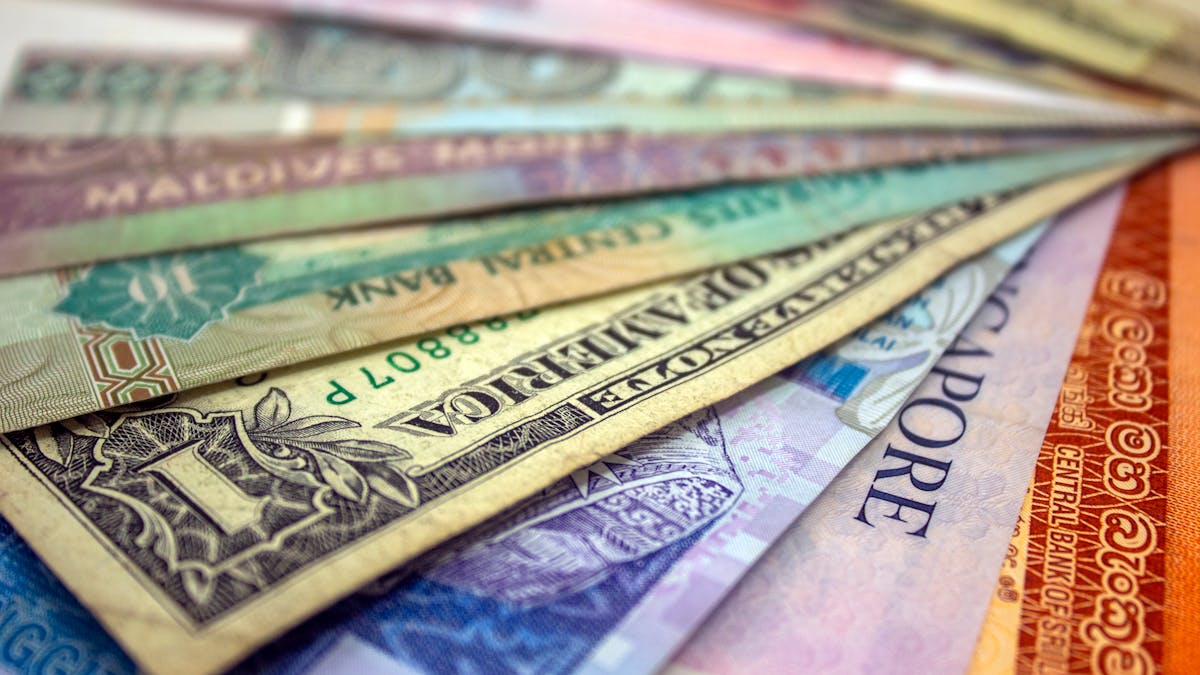
For most UAE-based founders eyeing Hong Kong, this is the real draw. A Hong Kong company opens the door to genuine multi-currency banking — accounts that hold and move US dollars, euros, Hong Kong dollars, and crucially Chinese renminbi (RMB) side by side. If you're paying mainland suppliers in RMB while collecting from Western customers in USD or EUR, settling both from one Asia-based entity removes a layer of friction and FX cost that a single-currency setup elsewhere can't.
The last few years brought a wave of digital banks and fintech platforms — names like Airwallex, Wise, and the major payment processors — alongside the traditional banks. For a foreign founder, that means accounts that can often be opened without a Hong Kong visit, provided the application is clean and the business is real. We prepare the know-your-customer (KYC) file the bank wants — proof of a genuine business, customer or supplier contracts, your address verification, a clear description of the money flows — and we introduce you to our digital and traditional banking partners.
Then there's proximity. Hong Kong sits at the edge of the Greater Bay Area, the cluster of manufacturing and tech cities around the Pearl River Delta. For a trader or an e-commerce operator, that closeness — to factories, to freight, to RMB settlement, to a deep bench of sourcing agents — is something a Gulf base simply can't replicate. The entity lives where the supply chain lives.
The UAE-side caveat (and why we keep it broad)
Here's the honest boundary of this post. A Hong Kong company is an additional entity in your structure; it does not change your UAE residency, your visa, or your personal tax position one bit. We are Hong Kong specialists, not UAE advisors, so we will not put a figure on the UAE side — and you should be wary of anyone who does without knowing your full picture.
The UAE is a popular zero or low-tax base for international founders, and for many it is genuinely excellent. But how your own situation interacts with a foreign company you own — corporate substance, where profits are deemed to arise, any local reporting that flows from owning an overseas entity — depends entirely on your specific setup. Confirm your exact UAE position with a qualified local advisor before you add a Hong Kong layer. What we stand behind, and detail in full, is the Hong Kong side: the incorporation, the tax, the banking, and the ongoing compliance.
When Hong Kong fits — and when staying UAE-local is the better call
This isn't a one-size answer, and we'd rather you reached the right one than the one that sells an incorporation. A Hong Kong company tends to fit when your trade is Asia-facing: you source from or sell into China and the wider region, you need RMB alongside USD and EUR, you want an entity that Asian counterparties recognise instantly, or you're a consultant invoicing global clients who want a credible, bankable base near the world's manufacturing core.
Staying UAE-local is often the better call when your market, your clients, and your life are centred on the Gulf, Africa, or South Asia — when most of your revenue is regional and an Asia-facing entity would add structure without adding reach. Many founders also run both: the UAE as home and personal base, a Hong Kong company as the Asia-trading arm. If you're weighing this as a remote operator specifically, our guide for running a Hong Kong company as a digital nomad covers the run-from-anywhere mechanics, and the seven myths about setting up as a foreigner clears the fears that usually cloud the decision.
How Athenasia sets it up and runs it for you
Our role is to make the Hong Kong side a non-event. We handle the Hong Kong incorporation for foreign founders end to end: we file the incorporation forms with the Companies Registry and the Inland Revenue Department, provide the statutory company secretary and registered office from day one, prepare your banking KYC file, and introduce you to our digital and traditional banking partners. You provide your identity documents and the handful of decisions only you can make — company name, share allocation, financial year-end — and we do the rest from here.
After setup, the company carries a predictable annual rhythm: the NAR1 annual return filed with the Companies Registry within 42 days of the incorporation anniversary, the Business Registration renewed each year (currently HK$2,350, no markup), and a profits-tax return supported by accounts audited by a Hong Kong CPA. We run all of it as ongoing service, so the dates land in our inbox, not yours — and you keep running the business from Dubai.
If you're a UAE-based founder weighing an Asia-facing entity against staying local, the right first step is a short conversation that maps your specific situation — your market, your supply chain, and what banking will realistically look like for you. Speak with our Hong Kong team for a free consultation, and we'll tell you honestly whether Hong Kong is the smarter base for your case or whether you're better off where you are.
The Bottom Line
A Hong Kong company won't change your UAE residency, your visa, or your personal tax — and the UAE remains a popular low-tax base you should confirm with a local advisor. What a Hong Kong company changes is your reach into Asia: a credible, bankable, multi-currency entity that sits on China's doorstep, set up for around HK$3,895 in government fees and run entirely from Dubai. It is taxed on profits at 8.25% and 16.5%, with no VAT and no capital gains tax.
When your trade looks toward Asia, that combination is hard to beat — and when it doesn't, staying UAE-local is the honest answer. Either way, the Hong Kong side is the part we can detail with confidence and handle from end to end: incorporation, the company secretary and registered office, your banking introductions, and the annual compliance, so the only hard part left is deciding which base your business actually needs.