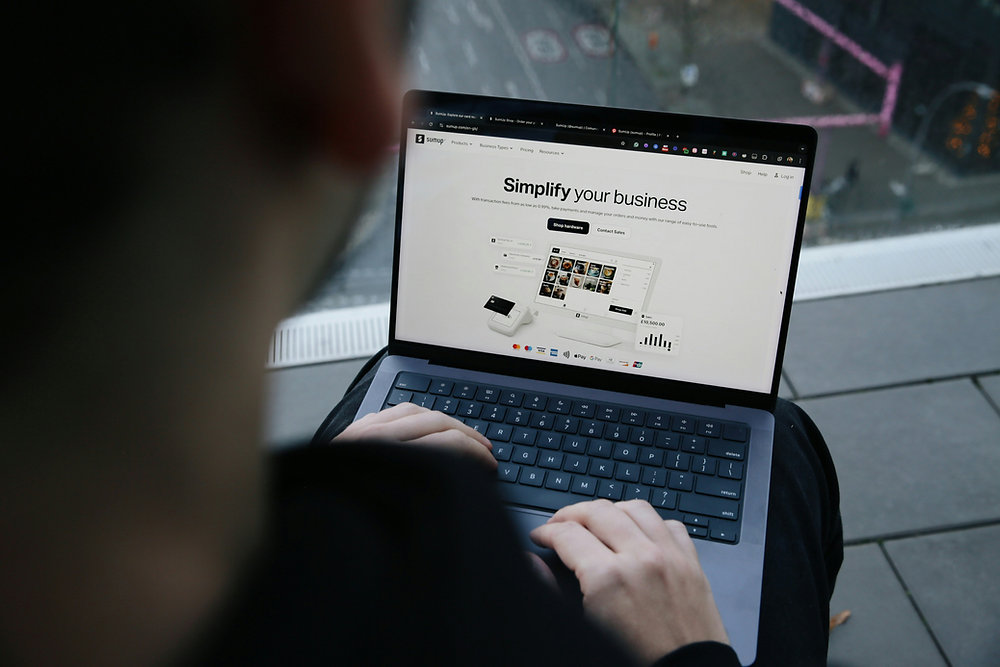
If your business has no fixed home, a Hong Kong company can be its address: a stable, credible base for invoicing global clients and holding multiple currencies, run entirely from your laptop. One honest caveat first — a Hong Kong company does not set your personal tax residency. That depends on where you are.
Most digital nomads solve the wrong problem first. They obsess over which country to spend 183 days in, which visa to chase, which café has the best Wi-Fi — and leave the business itself running through a personal bank account, a sole-trader registration back home they've half-outgrown, or nothing formal at all. The question that actually moves the needle is quieter: where does your business live, when you don't live anywhere in particular?
For a lot of location-independent founders — consultants, freelancers, creators, small software businesses — a Hong Kong company answers that well. It gives the business a fixed, reputable home that doesn't move when you do, that clients recognise on an invoice, and that you can run from a phone in an airport lounge. But it's not for everyone, and it does not do one thing people desperately want it to do. Let's be honest about both. Here's the quick self-check first.
A Hong Kong company likely fits if…
- You invoice clients in several countries and want one clean entity to bill them all from.
- You earn and spend in multiple currencies and lose money to clumsy conversions.
- Your clients are mostly outside your passport country, and increasingly business buyers.
- You want a credible base that doesn't change every time you move country.
- Your revenue is steady enough to carry an annual running cost without strain.
Probably not yet if…
- You're still testing an idea and revenue is occasional or under a few thousand a month.
- You're hoping a foreign company will erase tax back home — it won't (more below).
- You're firmly tax-resident somewhere that taxes you wherever your company sits, and you've no plan to confirm how that interacts.
- One local client makes up almost all your income and expects a local entity.
The Nomad's Real Problem: A Business With No Home
When you're location-independent, your business inherits all your rootlessness — and that's where the friction shows up. A personal PayPal balance isn't a company. A sole-trader setup in a country you've physically left starts to feel mismatched. And ad-hoc invoicing from "wherever you happen to be this quarter" makes larger clients nervous, because their finance team needs a stable, named counterparty to pay, not a moving target.
What a nomad actually needs is an entity that stays put while you don't: a single legal home for the business that owns the client contracts, receives the money, holds the currencies, and looks the same on every invoice whether you're sending it from Lisbon, Bali, or a layover in between. The entity needs to be somewhere reputable (so banks and clients take it seriously), somewhere genuinely runnable from a distance (so you never have to fly in to keep it alive), and somewhere with a tax system simple enough that you're not buried in admin. Hong Kong scores on all three — which is why it keeps coming up for this persona. If you're weighing the broader question of fit, our pillar guide on who a Hong Kong company is actually right for maps the personas in detail.
What a Hong Kong Company Actually Gives a Location-Independent Founder
Strip it back and a Hong Kong private limited company hands a nomad four concrete things. First, a credible, stable home base — a real company in a recognised financial centre, not a flag-of-convenience shell, so a contract carrying its name doesn't raise eyebrows in a client's procurement department. Second, full remote operability: you can incorporate and run the company without setting foot in Hong Kong, because the parts that need a local footprint are handled for you (more on that below).
Third, a simple, profits-based tax system. Hong Kong taxes profits, not turnover, at a two-tier rate of 8.25% on the first HK$2 million of assessable profits and 16.5% above that, per the Inland Revenue Department. There's no VAT or GST and no capital gains tax — so a one-person consulting or content business isn't drowning in sales-tax filings. Fourth, a clean entity for banking and payments — the foundation that lets you open the multi-currency accounts and payment rails a borderless business depends on. We cover what's involved in setting all this up on our Hong Kong incorporation page.
None of this requires you to be anywhere physical. The company is a fixed point; you remain the moving one. Mapped against what a nomad actually needs, it lines up like this:
| What a nomad needs | How a Hong Kong company delivers |
|---|---|
| Invoice global clients from one entity | A single recognised private limited company owns the contracts and bills clients anywhere — the same credible name on every invoice. |
| Hold and move multiple currencies | Multi-currency business accounts receive, hold and convert across currencies, so you stop bleeding margin on every conversion. |
| Look credible to clients and banks | A real entity in a recognised financial centre — not a flag-of-convenience shell — that procurement teams and banks take seriously. |
| Run it from anywhere, no office | Set up and operated fully remotely; the required company secretary and registered office are provided for you, so there's no place you must physically be. |
| Keep admin and tax simple | Profits taxed at 8.25% / 16.5%, with no VAT/GST and no capital gains tax — and we run the annual filings as ongoing service. |
Multi-Currency Banking and Invoicing From Anywhere
This is the part nomads feel most immediately, because it's a daily pain. You bill a client in euros, a second in US dollars, a third in pounds, and you're spending in whatever country you're standing in this month. Run that through a single-currency personal account and you bleed margin on every conversion.
A Hong Kong company changes the shape of that. The entity can hold multi-currency business accounts — receiving in several currencies, holding balances, and converting on your terms rather than your bank's worst rate. The rise of digital banks and fintech platforms (names like Wise, Airwallex, and payment processors such as Stripe) means much of this can be opened and operated remotely, provided the application is clean and the business is genuine. We don't push one provider over another; what we do is prepare the know-your-customer (KYC) file — proof of a real business, client contracts, your address verification, a clear picture of the money flows — and introduce you to our digital and traditional banking partners.
Incorporation is the easy step; banking is the real work, and a vague application from "a nomad with a laptop" is exactly what gets declined. A well-prepared file from a credible founder with real clients is a different conversation entirely — and a clean digital onboarding typically clears in around one to two weeks.

The Honest Caveat: A Hong Kong Company Is Not Your Tax Residency
Here's the part too many "go nomad, pay zero tax" pitches skip — so read it twice. Where your company is incorporated and where you are personally tax-resident are two different questions. Setting up a Hong Kong company does not make you a Hong Kong tax resident, and it is not a mechanism for escaping tax in the country that considers you resident. Your personal tax position is driven by where you are — where you spend your time, where your ties are, and how the country you're connected to defines residency — not by where your company's certificate was issued.
Many countries also look at where a company is genuinely managed and controlled, not just where it's registered — so a founder who is firmly resident somewhere can't assume an offshore registration is the end of the story. These rules vary enormously from one country to the next, they change without notice, and they are squarely outside Hong Kong's lane — so we won't pretend to give you a number for your situation. What we can tell you plainly: confirm your personal position with a qualified tax advisor where you are tax-resident before you build a structure around assumptions. What we stand behind is the Hong Kong side — the company, its profits tax, its filings, and how we run it. For the territorial-tax mechanics on the Hong Kong side specifically, our note on the myths foreign founders believe about Hong Kong companies unpacks where the "offshore" label really applies. The honest framing isn't "pay no tax" — it's "a clean, credible base, with your personal taxes handled properly wherever you owe them."
When It Fits — and When It's Premature
A Hong Kong company tends to fit once your business has crossed from "experiment" into "real": you've got recurring clients across borders, you're losing money to currency friction, and the patchwork of personal accounts and a half-outgrown home setup has become a liability rather than a convenience. At that point the running cost buys you genuine leverage — a stable home, better banking, a credible face — and pays for itself in saved friction and won contracts.
It's premature when the business is still a maybe. If revenue is occasional, if you're testing whether the idea even works, or if a single client in your home country makes up almost everything you earn and wants a local supplier, an international company is overhead you don't need yet. The same is true if your whole reason for incorporating abroad is to sidestep home-country tax — that's the wrong foundation, and it leads to a structure that doesn't survive scrutiny. For founders moving up from a personal trading setup, our guide on Hong Kong versus a domestic micro-business regime for consultants walks through where that threshold sits.
What Our Package Covers
For a location-independent founder, the appeal is that there's almost nothing left for you to physically do. We handle the incorporation end to end and file the forms with the Companies Registry on your behalf. Hong Kong law requires every company to have a local company secretary and a registered office address — both of which would be impossible for a nomad with no fixed base, so both are included in our package from day one. The full government fee schedule sits on gov.hk, and we never mark it up.
Government cost to set up: HK$3,895 — HK$1,545 Companies Registry electronic incorporation fee + HK$2,350 one-year Business Registration (incl. the HK$150 levy reinstated 1 April 2026). One transparent professional fee to us on top; no markup on the government rates.
Incorporation itself takes about 3 to 5 working days. From there we prepare your banking file and make the introductions, and run the ongoing rhythm — the annual return, the Business Registration renewal, and the profits-tax return with audited accounts — as continuing service through our accounting and audit team. The dates land in our inbox, not yours, which is the entire point when your "office" is wherever you opened your laptop this morning. Non-resident founders can see exactly what's involved on our incorporation for foreigners page.
If you've read this far and quietly recognised yourself in the checklist — borderless, billing across currencies, tired of looking improvised on invoices — the fastest way to know whether a Hong Kong company actually fits is a short conversation about your specific setup: your clients, your currencies, where you spend your time, and what banking will realistically look like for you. Speak with our Hong Kong team for a free consultation, and we'll tell you honestly whether this is your base — or whether you're not there yet.
The Bottom Line
For a location-independent founder with real, cross-border revenue, a Hong Kong company is a genuinely good home base: a stable, credible entity that invoices the world, holds multiple currencies, and runs entirely from your laptop — set up for HK$3,895 in government fees, taxed on profits at 8.25% and 16.5%, with no VAT or capital gains tax. The statutory company secretary and registered office that a nomad couldn't otherwise provide are built into the package.
What it is not is a way to disappear from your home-country tax. A Hong Kong company doesn't set your personal residency — that depends on where you are, and you should confirm it with a qualified advisor where you're tax-resident. Get that part right and the rest is simple: when the base fits, we incorporate it, bank it, and run it, so the only thing that keeps moving is you.