Hong Kong gives Asia-based founders a clean, globally connected corporate base — territorial taxation, low profits tax, no VAT, free capital flows, and a deep banking stack. The structure is powerful for cross-border trading, invoicing, and holding, but it works only when the profit-producing activity genuinely sits outside Hong Kong and outside any other jurisdiction that taxes the same profits.
Why an expat in Thailand (or anywhere in Asia) might open a Hong Kong company
If you sell across borders from Southeast Asia, Hong Kong is purpose-built for simplicity: a territorial tax base (generally taxing only Hong Kong-sourced profits), a two-tier corporate profits tax with an 8.25% rate on the first HK$2 million of profits and 16.5% above that, and no VAT or GST at all.
Pair that with a hard-pegged currency to the US dollar, no foreign-exchange controls, a deep banking and payments stack, and a broad treaty network, and you have a clean operating hub — so long as your operations don’t inadvertently become taxable in another country that has first claim on the same profits.
The tax edge: territoriality, low rates, and no VAT
Territorial profits tax. Hong Kong taxes profits that arise in or are derived from Hong Kong — determined by what you actually did to earn the profits and where you did it (the “operations test”). That means genuinely offshore profits can be outside Hong Kong profits tax. This isn’t a blanket exemption: source is a practical, fact-heavy inquiry.
Low, two-tier rates. Corporations pay 8.25% on the first HK$2 million of assessable profits and 16.5% on the remainder — competitive against most regional jurisdictions and a frequent draw for cross-border operators.
No VAT/GST. Hong Kong has no value-added tax or goods-and-services tax and is a free port with tariffs only on a few dutiable goods (alcohol, tobacco, certain oils). If your supply chain runs through multiple countries, removing a VAT layer simplifies pricing and cash flow.
Caveat — FSIE regime for passive income. Since 2023, Hong Kong’s foreign-sourced income exemption (FSIE) regime deems certain offshore passive income taxable when received in Hong Kong by in-scope MNE entities unless substance or other reliefs apply. From 1 January 2024, the regime expanded to cover disposal gains on all asset types (not just equity). For most SMEs outside a multinational group, this may be a non-issue, but if you’re part of an MNE group, you’ll need to check substance, participation, and nexus rules before parking passive income in Hong Kong.
How Hong Kong interacts with the country you live in (the conceptual picture)
The cross-border structure only works if you understand the same principles apply in every country you have a real presence in. A Hong Kong company does not replace the tax system of the country where you actually live, work, or earn revenue.
Your home country still has its own rules. Most countries tax residents on worldwide income and source-country income, and impose withholding on payments to non-resident entities. Confirm current rates, residency tests, and thresholds with a local tax advisor — these are the rules a Hong Kong structure does not replace.
Personal tax: the new era of stricter remittance treatment. A growing number of jurisdictions (including several in Asia) have moved away from remittance-year-based rules toward taxing foreign-source income brought in by residents regardless of when it was earned. If you’re a tax resident where you live, the timing and routing of distributions from your Hong Kong company now matter more than they used to. Get local personal-tax planning before you wire dividends, salary, or capital back.
Treaty safety net, with the usual paperwork. Hong Kong’s tax-treaty network (covering most major Asian and Western jurisdictions) reduces double taxation and limits withholding on dividends, interest, and royalties. Benefits require residency certificates and reclaim paperwork — and the treaty mitigates double tax, it does not replace local substance rules. A structure that has real economic activity in your home country will be taxed there regardless.
Local VAT/GST exposure. If you regularly supply goods or services in your home country — even invoiced from a Hong Kong company — you may need to register for local VAT/GST once you cross the local turnover threshold. The exact threshold, rate, and registration trigger are country-specific and change frequently; confirm with a local advisor before invoicing.
Sectoral restrictions. Most countries reserve certain activities (real estate, domestic transport, agriculture, regulated professions, and others) for local majority-owned entities. A Hong Kong entity does not bypass these restrictions if the real activity is on local soil — it only helps if your services are genuinely cross-border.
Banking, currency and payments: less friction, more predictability
Hong Kong’s banking system is deep, internationally plugged-in, and increasingly friendly to SMEs (including virtual banks). Critically, Hong Kong has no foreign-exchange controls, and the Hong Kong dollar is hard-pegged within a 7.75–7.85 band to the US dollar under the Linked Exchange Rate System — useful if you invoice in USD or maintain USD-linked cash flows from a regional base into global markets.
Market access: China gateway and treaty network
If your regional business increasingly touches Mainland China — suppliers, customers, or capital — Hong Kong offers privileged access through the Mainland–Hong Kong Closer Economic Partnership Arrangement (CEPA) and a set of “connect” schemes. CEPA gives qualifying Hong Kong service suppliers easier market entry in many sectors. Even if you don’t need CEPA status, Hong Kong’s role as China’s international financial hub can materially reduce friction when you start dealing with RMB or Mainland counterparties.
Incorporation and compliance are straightforward (and fast)
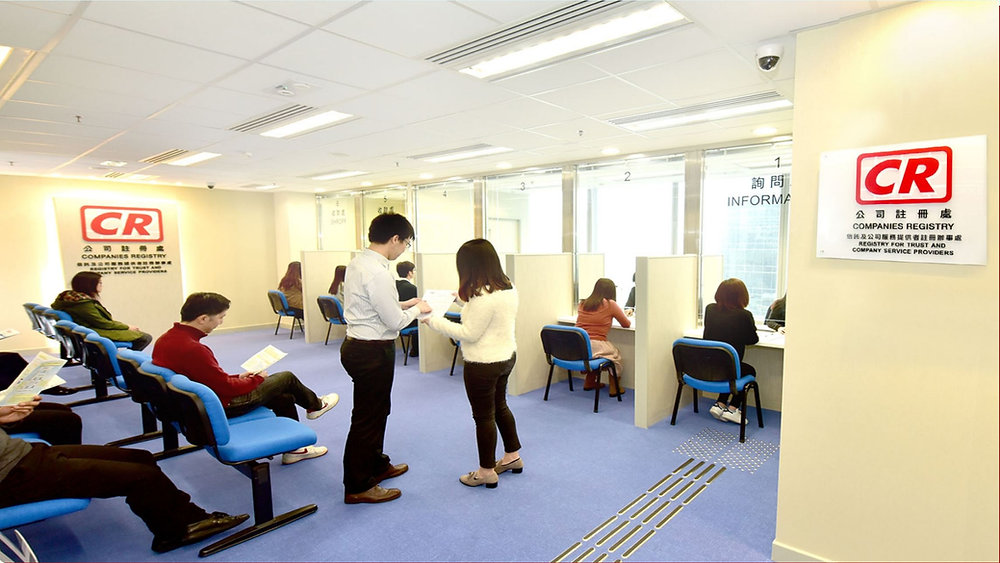
Forming a private company limited by shares in Hong Kong is efficient, with e-filing available and familiar common-law company law. You need at least one director who is a natural person and a Hong Kong-based company secretary; the sole director cannot also be the company secretary. Expect annual statutory audit for most companies and audited accounts with your profits tax return. None of that is exotic — but it’s real work you should budget for.
The best-fit use cases for Hong Kong (when you live elsewhere)
- Cross-border trading and distribution. If your revenue is mainly from customers outside your home country and your procurement or logistics already involve Hong Kong or Southern China, a Hong Kong trading company can simplify contracting, customs, and payments — without adding a VAT layer. Ensure warehouse, sales, and contract-execution steps that generate the profit are outside your home country if you want to avoid creating a local permanent establishment.
- Regional B2B services with global clients. Consulting, software, and digital services delivered to non-local clients may cleanly sit in a Hong Kong company, provided the revenue-generating activities happen outside your home country (or you can ring-fence local presence below permanent-establishment thresholds). Watch local withholding and VAT/GST if services are “used” in your home country.
- Holding and IP companies. For holding regional subsidiaries or IP, Hong Kong’s territoriality and robust legal infrastructure are attractive. For passive income (dividends, interest, disposal gains) within an MNE group, assess the FSIE regime’s substance requirements before assuming a full exemption.
- China-facing expansion. If your regional business is pulling you towards Mainland customers, CEPA pathways and Hong Kong’s connect infrastructure make Hong Kong a pragmatic control tower.
The tripwires to respect
- Permanent establishment in your home country. If you (or your team) habitually conclude contracts there, have a fixed office, or render services over a substantial period, local tax can apply even if the contracting entity is in Hong Kong. The relevant double-tax treaty (if any) spells this out, including service-PE concepts. Get local advice early if sales or delivery happen where you live.
- Local withholding on payments to a foreign company. Local payers commonly withhold on fees to overseas vendors; the treaty can reduce or eliminate the final tax, but you’ll need forms and often a refund process. Set expectations with your local customers and price for the admin.
- Personal remittance rules for tax residents. If you’re a tax resident where you live and you wire dividends, salary, or capital from your Hong Kong company back, the remittance may now be taxable regardless of when it was earned. Planning the timing and routing of distributions matters more than it used to.
- Local VAT/GST exposure. Regular supplies “in” your home country, or services “used” there, can trigger local VAT/GST registration once you cross the local turnover threshold. This is true even if you invoice from Hong Kong. Track where value is actually delivered and used.
- Substance and documentation. If you want to argue Hong Kong profits are offshore (and thus outside HK profits tax), align the profit-producing operations with locations outside Hong Kong and keep evidence (contracts, communications, logistics). For MNE groups, also check the FSIE substance rules for passive income and keep transfer-pricing files where the local thresholds apply — the exact thresholds and what triggers a file requirement are country-specific.
- Big-co wrinkle: global minimum tax. For very large groups (EUR 750m+ revenue), both Hong Kong and many of its treaty partners are implementing the OECD 15% Pillar Two rules, including a Hong Kong domestic top-up tax. This won’t affect most SMEs, but it’s essential for group tax teams.
A practical decision tree
- Your customers are mostly outside your home country, and your delivery happens outside your home country → Hong Kong can be a clean contracting hub. Add the relevant double-tax treaty to your playbook (paperwork up front).
- You sell mostly to local customers or perform work locally → a local entity (possibly with local investment-promotion incentives) may be simpler for VAT/GST, payroll, and withholding. You can still keep a Hong Kong parent or regional treasury — just manage transfer pricing and permanent-establishment boundaries.
- You are (or will become) a local tax resident and plan to live on distributions remitted from abroad → consider local personal tax planning and the latest remittance interpretation before routing your own income through Hong Kong.
Incorporation “nuts and bolts” in Hong Kong
- Structure: Private company limited by shares.
- Officers: ≥1 natural-person director; Hong Kong-based company secretary (the one director can’t also be the secretary).
- Compliance: Annual audit for most companies under the Companies Ordinance; audited accounts accompany the Profits Tax Return.
- Tax rates: 8.25% on first HK$2m of profits, 16.5% thereafter; no VAT, no withholding on dividends/interest; limited royalty-withholding mechanics.
- Currency & banking: HKD linked to USD; no FX controls; multi-currency accounts common.
Example scenarios
A. ASEAN e-commerce sourcing from China. You’re based in a regional hub (Bangkok, Singapore, KL — the structure is the same), your customers are in the US/EU, and you source from Shenzhen. A Hong Kong trading company contracts with suppliers and customers; fulfilment and title transfer occur outside your home country; you pay yourself a modest local-taxed salary for any local work, and retain profits offshore for reinvestment. You still watch local permanent-establishment and VAT/GST thresholds, and the personal remittance rules, before bringing surplus cash home.
B. Regional consulting with some local delivery. You sell projects to clients in multiple countries but spend part of the year where you live. Keep Hong Kong for contracts and billing; ensure key profit-creating activities (negotiation, signing, performance) happen outside your home country to manage local permanent-establishment and service-PE risk. If local work grows, spin up a local entity and put an intercompany agreement in place.
C. China market entry from a regional base. You plan to serve Mainland customers. Incorporate in Hong Kong for bankability and as your CEPA gateway (if you qualify as a “Hong Kong Service Supplier”), then decide later whether to set up in the Mainland.
What this is not
Setting up in Hong Kong is not a magic wand to avoid local taxes if your real business is in your home country. Your local Revenue Code, withholding regime, and VAT/GST rules still bite on locally sourced income; the relevant treaty mitigates double taxation but isn’t a shield against local substance reality. Likewise, Hong Kong’s IRD will look at where your profit-producing operations happen before blessing an “offshore claim.” Build your facts — and your files — to match your structure.
Bottom line
For a founder based anywhere in Asia with cross-border revenue, a Hong Kong company can deliver a cleaner tax position, easier invoicing, and predictable currency and banking — with the relevant double-tax treaty as a helpful bridge. The structure works best when your customers and operations are primarily outside Hong Kong and outside any other jurisdiction that has first claim on the same profits, and when you respect the personal remittance, withholding, and local substance rules of wherever you actually live.
If your growth tilts toward customers in one country, or your local headcount grows, blend the two: a local operating company for local delivery, and a Hong Kong parent or regional treasury to keep cross-border finance smooth.