If you coach clients or sell courses to a global audience, a Hong Kong company can give you one credible entity to take multi-currency payouts, hold your brand and course content, and pay tax on profits rather than turnover — all run remotely. But where you're personally tax-resident still matters, so the fit has to be checked, not assumed.
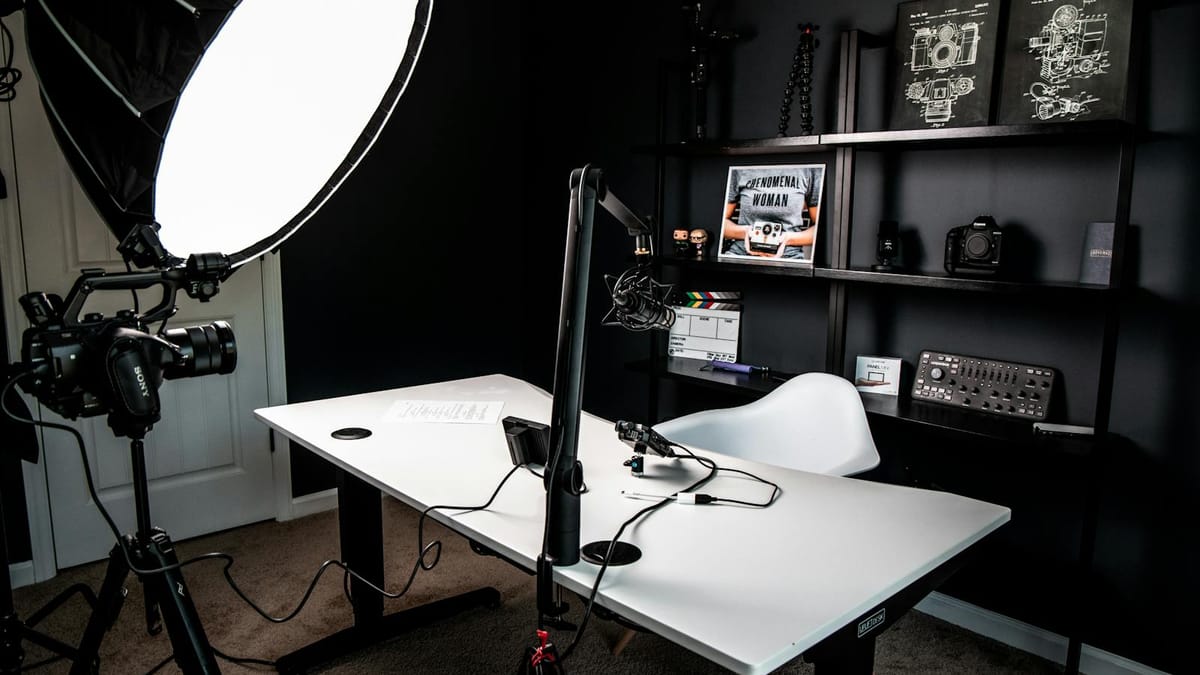
Picture the typical online educator in 2026. You record lessons in one country, your students log in from a dozen others, a course platform collects their payments, and a payment processor drops the money into your account in three or four currencies. You might have a virtual assistant in one timezone and an editor in another. The "business" is you, a laptop, a ring light, and an audience that pays no attention to borders — which is exactly why the borders eventually start paying attention to you.
At some point the question stops being "how do I get more students?" and becomes "what should I actually be — a person collecting payouts, or a company?" Hong Kong comes up a lot in that conversation, and for good reasons: it's built for cross-border revenue, it taxes profits rather than gross sales, and you never have to set foot there to run it. This post is the honest version — where a Hong Kong company genuinely earns its place in a coach's or creator's setup, and where it's premature. Here's the scannable version first.
| What a creator needs | How a Hong Kong company delivers |
|---|---|
| Take student payments in many currencies | A company-name multi-currency account holds USD, EUR, GBP and more, so you stop bleeding margin on forced conversions every time a student in a different country buys. |
| Get paid by course platforms & processors | Course platforms and payment processors pay out to a real, named business — cleaner know-your-customer (KYC) onboarding than a personal account, and one consistent payee on file. |
| Hold your brand, IP & course content | The company — not you personally — owns the trademarks, the course library, and the contracts, which separates the asset from the individual and makes it sellable later. |
| Pay contractors, VAs & editors | Pay international freelancers from a business account on proper invoices, as a legitimate business cost deducted before tax — not out of your personal pocket. |
| Tax on profit, not on every sale | Hong Kong taxes assessable profits — revenue minus your real costs — at 8.25% on the first HK$2M and 16.5% above. No VAT/GST on the company, no capital gains tax. |
| Run it from anywhere | 100% foreign-owned, incorporated remotely in 3–5 working days, with the company secretary and registered office we provide — no flight, no local partner, no office lease. |
First, the real question: should a creator be a company at all?
Plenty of coaches and course creators run for years as a person, not a business — payouts land in a personal account, tax gets sorted at home, and that's fine while the numbers are small. The reason to form a company isn't vanity; it's that at some level of revenue, audience, and risk, being "just you" starts to cost you money, credibility, and sleep.
A company does three things a sole individual can't do cleanly. It puts a legal wall between your business and your personal assets. It becomes the owner of the things that actually have value — your brand, your course catalogue, your client contracts — so the business is a thing that exists separately from you. And it gives platforms, processors, and partners a real counterparty to deal with instead of an individual's name. If you're still weighing whether incorporation is even the right move, our guide to who a Hong Kong company is actually right for is the better starting point before you pick a jurisdiction.
The jurisdiction question — Hong Kong specifically — only matters once you've decided a company makes sense. So assume you're past that line, and let's look at what Hong Kong does well for this particular business model.
Getting paid globally: the multi-currency core of the case
The single most common pain for a global creator is money arriving in the wrong shape. A student in Germany pays in euros, one in the UK in pounds, one in the US in dollars — and if every payout gets force-converted into one home currency on the way in, you lose a slice of margin on each transaction and again whenever you pay a contractor in their currency. Multiply that across thousands of small course sales and the leakage is real.
A Hong Kong company solves the structural part of this. With a company-name account, the major payment processors and the multi-currency platforms creators use — the kind that let you hold and pay out in USD, EUR, GBP and others — onboard a real business rather than an individual, and a company can hold balances in several currencies instead of converting everything on arrival. Course platforms and processors generally want to pay a named, verifiable business; a Hong Kong limited company is a clean, recognised payee that doesn't raise the eyebrows a personal account or an obscure offshore shell might.
Two honest caveats. First, the bank or fintech account is its own step — incorporation is the easy part, and we prepare your KYC file and introduce you to our digital and traditional banking partners rather than leaving you to apply cold. Second, naming names: tools such as Stripe, Wise, or Airwallex come up because creators use them, but we stay neutral and never push one over another — the point is the category (a business-grade, multi-currency processor and account), not any single brand.
Brand, IP, and credibility: owning the thing you built
Your course library, your method, your brand name, your community — that's the asset. When you operate as an individual, those assets are tangled up with you personally, which is a problem in three situations: if anyone ever questions ownership, if you want to bring on a partner or sell, or if a platform or sponsor wants to contract with "a business." A company untangles it. The Hong Kong entity owns the trademark, holds the content licences, and signs the contracts, so the value sits in something distinct from you.
There's a credibility layer too. A Hong Kong private limited company is a standard, transparent entity in a long-established financial centre — you can verify the public framework yourself on the Companies Registry. When you invoice a corporate client for a workshop, license your curriculum to a training provider, or sign a brand deal, presenting a real company reads very differently from a personal PayPal request. It signals you're a business that intends to be around.

Tax on profits, not turnover — and the part that isn't Hong Kong's
Here's where creators often misunderstand how tax works, so it's worth being precise. Hong Kong taxes a company on its assessable profits — your course and coaching revenue minus your genuine business costs (your editor, your VA, your software, your platform fees, your ad spend) — not on gross sales. Profit, not turnover, is the base. The rate is a two-tier Hong Kong profits tax: 8.25% on the first HK$2 million of assessable profits and 16.5% above that, as set out by the Inland Revenue Department. There's no VAT or GST levied on the company and no capital gains tax — two costs creators often brace for and don't meet here. The proper accounting and the annual audit that sit behind that return are work we handle through our accounting and audit service.
Now the part that is emphatically not Hong Kong's to answer: where you pay personal tax. If you live in France, Canada, the UK, Australia — anywhere — your own country has its own rules about taxing residents, about controlled foreign companies, and about money you draw out of a company you control. Those rules can be significant, and they vary enormously. We don't advise on them, and you should be wary of anyone who waves them away. Confirm your personal position with a qualified advisor where you're tax-resident. What we stand behind is the Hong Kong side; the home-country side is real and yours to check.
Substance: a company has to actually be a company
One more honest point that the "0% offshore" crowd glosses over. A Hong Kong company is not a magic flag you plant to make tax disappear. It needs substance — meaning it should be a genuine business making real decisions, with proper records, that does what it says it does. For a one-person creator business, substance isn't about renting a Hong Kong office or hiring local staff; it's about the company genuinely being the thing that runs your operation — owning the accounts, the contracts, and the IP, and keeping clean books.
Where this bites is the territorial tax claim. Hong Kong's territorial principle means profits genuinely sourced outside Hong Kong may fall outside the charge — but that is never automatic. The Inland Revenue Department examines each offshore claim, and the Foreign-Sourced Income Exemption (FSIE) rules add nuance. Treat any promise of effortless zero tax as a red flag, not a feature. The realistic, defensible position is a properly-run company taxed transparently on its profits — and that's the one that survives scrutiny from both Hong Kong and your home country.
When it fits — and when it's premature
A Hong Kong company is a tool, and tools have a right time. It tends to fit once you have a genuinely global, recurring revenue stream, real costs you're paying to other people, and assets worth ring-fencing. It's usually premature if you've just sold your first cohort and your "global audience" is three friends and a cousin — at that stage the annual running cost outweighs the benefit, and you'd be buying machinery for a job you don't yet have. Run yourself through this checklist.
A Hong Kong company likely fits if…
If you ticked one or two, you're probably early — revisit when the revenue and the global footprint are real.
What our Hong Kong package actually covers
When the structure fits, the setup itself is refreshingly light, and the cost is public — no mystery, no markup from us on government fees.
HK$3,895 — HK$1,545 Companies Registry (CR) electronic incorporation fee + HK$2,350 Business Registration (BR) for one year, which includes the HK$150 levy reinstated on 1 April 2026. One transparent professional fee to us on top; no markup on the government rates.
That HK$3,895 is the government cost: the HK$1,545 CR electronic incorporation fee plus the HK$2,350 one-year BR certificate (the HK$150 levy was reinstated on 1 April 2026 after a two-year waiver, which is why older figures look lower). The company is 100% foreign-owned with a single director and shareholder — which can be you — and incorporation typically completes in 3 to 5 working days, entirely remotely. The statutory company secretary and a Hong Kong registered office are included from day one, and we file the incorporation with the Companies Registry on your behalf. Where creators should keep a clear head is the ongoing cost — BR renewal, the secretary and office, and the annual accounting and audit — which is exactly what we map to your numbers on a call. If you also sell digital products or physical merch alongside your courses, our e-commerce setup page covers how the same entity handles a storefront.
Coach, creator, or nomad? They overlap
If this sounds a lot like the location-independent consultant's situation, that's because the models rhyme — global clients, remote delivery, multi-currency income. The difference is mostly in how you're paid (course platforms and memberships versus client invoices) rather than in the structure underneath. If you spend much of the year moving between countries while you run the business, our companion guide on the Hong Kong company for digital nomads covers the residency-and-substance angle in more depth, and most of it applies to a creator on the move too.
The throughline is the same: Hong Kong gives a borderless, one-person business a credible home base that's built for cross-border money — but it never replaces getting your personal, home-country position right.
If you're a coach or course creator weighing this up, the fastest way to know whether Hong Kong fits is a short conversation about your specific setup — where your students are, how you're paid, what you're paying out, and where you're tax-resident. Speak with our Hong Kong team for a free consultation and we'll tell you honestly whether it's the right move or too early.
The Bottom Line
For an online coach or course creator with a genuinely global, recurring revenue stream, a Hong Kong company is a strong fit: one credible entity that takes multi-currency payouts from course platforms and processors, owns your brand and course content, pays your contractors as real business costs, and is taxed on profits — 8.25% then 16.5% past HK$2 million — rather than on every sale. It's 100% foreign-owned, set up remotely in 3 to 5 days, with government fees of just HK$3,895 and no VAT or capital gains tax on the company.
The caveats are just as real: where you're personally tax-resident still matters and is outside Hong Kong's lane, the company needs genuine substance, and if your audience and revenue aren't global yet, it's likely premature. When the fit is there, we handle the incorporation, provide the company secretary and registered office, prepare your banking file and make the introductions, and run the annual accounting and audit — so you can stay focused on teaching, not paperwork.