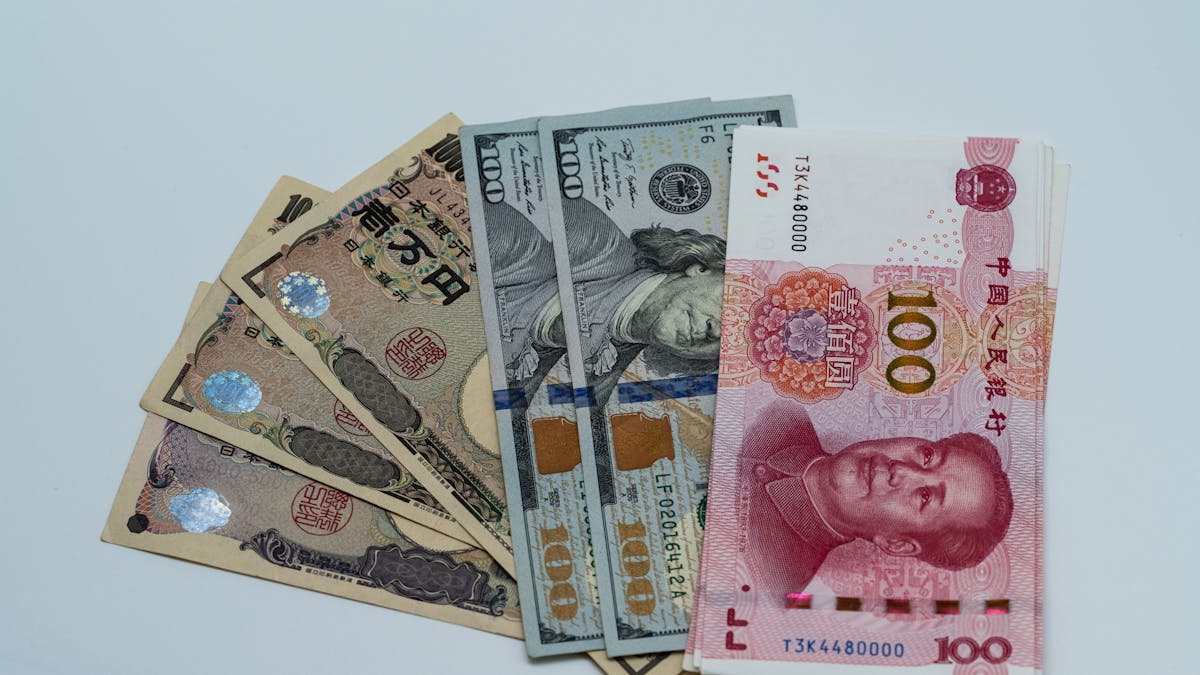
A Hong Kong multi-currency account solves the receipt side of running a global business — getting paid in USD, EUR, GBP, JPY without forced conversion. The strategic side — when to convert, when to hold — is still yours. The cumulative FX cost on cross-border revenue runs 2–4% per year for founders who treat it as an afterthought. A 15-minute quarterly framework and one free reference tool fix most of it.
Most founders we talk to think the FX question is "find a cheap converter." It is not. The real question is when to convert and when to hold the foreign currency — and most multi-currency stacks make that decision invisible by sweeping incoming USD or EUR into the home currency at the bank's spread, automatically, before the founder has thought about it. That default is what leaks margin.
Below is a layman-friendly framework we walk through with founders who run a Hong Kong company across two or three currencies. It is not trading advice. It is a quarterly review process plus one free reference tool, designed for a one-or-two-founder business with cross-border revenue.
The Three FX Costs Founders Don't See
Founders see the headline conversion fee on their bank app. They rarely see the full cost stack:
- Bank conversion spread on incoming receipts. Traditional Hong Kong banks typically run a 1–3% spread off the interbank rate on small-business conversions. Fintech "free transfer" providers often quote a tighter spread but still bake 0.4–1% into the rate they show you. None of this appears as a line item on your statement.
- Marketplace forced conversion. Amazon, Shopify Payments, Stripe, and others often default to converting your payouts into your "home currency" before they land in your bank. Their FX margin runs 1–2% on top of the bank's spread. If you are receiving USD revenue and getting paid out in HKD, you are paying two conversion costs back-to-back.
- Currency move drift. Over a 12-month period, EUR/USD can move 5–10%, GBP/JPY similarly, USD/SGD by smaller amounts. If you happened to hold the weaker currency for the whole year, that's a real cost — not a fee, just a worse outcome you locked in by not deciding.
Combine the three and a founder doing $300,000 of cross-border revenue can leak $6,000–$12,000 a year in FX cost they never see on a statement. At $1M of revenue, the leak is in the $20,000–$40,000 range. That is the cost of a senior hire, not a footnote.
The "Hold or Convert" Decision Framework
This is the part founders make harder than it needs to be. The framework:
- If you owe in that currency within 90 days, hold. If you owe a USD invoice to a US contractor in six weeks, do not convert your incoming USD revenue to HKD only to convert it back. Hold the USD.
- If you have months of buffer in the home currency, you can wait. If your HKD operating account already covers 6+ months of rent, salaries, and statutory costs, your incoming USD does not need to be converted today. You can review at the next quarterly cycle.
- If you need home-currency cash for ops in the next 30 days, just convert. Do not try to time. The cost of waiting two weeks for a slightly better rate is dwarfed by the cost of running short on operating cash.
- Do not try to time precisely. The goal of the framework is to avoid the obviously bad decisions ("I converted at the worst point in the last 90 days"), not to nail the absolute best moment. Founders who try to nail tops and bottoms always lose to founders who use a simple rules-based process.
Reading Currency Strength Without Becoming a Trader
You are not day-trading. You are a founder making maybe 4–8 conversion decisions per year. The right question at each cycle is simple: "Is now a worse time than the last 90 days to convert this currency?"
Tools to answer that question without subscribing to anything:
- Public price charts (Yahoo Finance, Google Finance) — show you absolute rates and historical lines. Useful for the 90-day comparison.
- A free macro currency strength meter — shows relative strength across the majors at a glance, so you can see at a glance whether EUR is running strong vs USD this week, or whether GBP is weak vs JPY. PipTheory publishes a free macro version that founders find useful for the quarterly sanity check: "is this currency running unusually strong or weak right now relative to its peers?" Use it as a directional reference, not as a buy / sell signal.
- A 90-day moving average on your own pair. Most charting tools let you overlay this in two clicks. If the current rate is materially worse than the 90-day average, you wait. If it is materially better, you convert. If it is in the middle, you follow the rules above.
The reason to use a tool rather than just eyeballing is anchoring bias. Founders remember the high tick they saw three weeks ago and treat today's rate as "bad" by comparison. A 90-day average and a strength chart remove that bias.

Why a Hong Kong Multi-Currency Account Helps
Hong Kong is structurally well suited to multi-currency operations:
- The HKD is pegged to the USD at approximately HK$7.80 per US$1 within a narrow band managed by the Hong Kong Monetary Authority. Your HKD operating account is effectively a USD play — your local rent, salaries, and statutory costs move in lockstep with the dollar.
- A real multi-currency business account from our digital-banking partners lets you receive and hold EUR, GBP, SGD, AUD, JPY, and USD separately, in named sub-wallets. You decide when to convert; the bank does not decide for you by default.
- Multi-currency cards let you pay vendors and software subscriptions in their local currency without round-tripping through HKD.
- We set this up as part of incorporation. The multi-currency account application goes in during Days 6–8 of our 10-Day Hong Kong Company Setup Playbook. Decision is typically inside 1–2 weeks for clean files.
The Three Founder Mistakes We See Most
From the conversion conversations we have with clients each quarter, three patterns recur:
- Auto-converting every receipt to the home currency immediately. Gives up the entire reason you set up the multi-currency stack. If your bank or marketplace defaults to this, change the setting before reading further.
- Trying to time the market without a framework. Anxiety drives bad decisions — founders end up converting at the worst moments and holding through the best ones. A 15-minute quarterly rules-based process beats hourly chart-watching every time.
- Ignoring the cumulative FX cost. If your cross-border revenue is small, the leak is small and the framework is overkill. Once you cross roughly US$200k/yr of cross-border revenue, the math justifies the quarterly habit. At US$1M+, it justifies a dedicated FX review with your accountant.
A Simple Quarterly Process
Block 15 minutes once a quarter. Open a fresh page in your notebook (or a doc):
- List your forward commitments by currency. Rent in HKD, salaries in HKD, US contractor in USD, software vendor in EUR, supplier in CNY. Roughly 90 days out.
- Cross-reference your current cash by currency. Do you have enough of each to cover what you owe? If not, conversion is needed; if yes, you have room to time.
- Check current FX rates vs the 90-day average. Use a charting tool or the free macro view at PipTheory. Mark each pair as "currently weaker / similar / stronger than the 90-day average."
- Decide which conversions to do this quarter. Apply the framework rules above. If you must convert and the rate is unfavourable, convert only what you need for the next 90 days, not your entire foreign-currency balance.
- Document the call in one sentence. "Converted $50k USD → HKD at 7.79 on 2026-05-28; held remaining USD against US-contractor obligations through Q3." This prevents second-guessing in week 4 and gives you a track record over a year.
That is the process. Fifteen minutes a quarter. Applied to a 2–4% recurring leak on cross-border revenue, the time-to-savings ratio is among the best uses of founder attention we know of.
If you are running a Hong Kong company across multiple currencies and the FX cost is starting to register on the P&L, the right first step is the structure conversation — what currencies you receive in, what you spend in, and which multi-currency partner fits your activity. Speak with our Hong Kong team — we set up the multi-currency stack as part of every incorporation, and our accounting and audit team tracks the FX cost as a real line on the P&L so it stops being invisible.
The Bottom Line
Multi-currency banking solves the receipt side of running a Hong Kong company doing global business. The strategic side — when to convert, when to hold — stays with you. The good news: the framework is small. List forward commitments by currency. Check current rates against the 90-day average using a free tool like PipTheory's macro currency strength view. Decide which conversions to do this quarter. Document the call. Repeat.
That habit, applied to a 2–4% recurring leak on cross-border revenue, is worth more than most founders realise. It is also one of the few founder workflows where 15 minutes a quarter materially moves the P&L.