
Worried the post-2020 headlines mean Hong Kong is no longer a stable place to base a business? It's a fair question to ask. For a standard commercial company the fundamentals that actually matter — a US-dollar-pegged currency, free movement of capital, a common-law legal system, deep banking, and simple low tax — remain firmly in place.
Plenty of founders who would otherwise put their company in Hong Kong pause at the same point. They've read years of headlines, they're not sure what's changed and what hasn't, and the honest worry underneath is simple: is this still a stable place to run a business? If that's you, you're asking a sensible question rather than an alarmist one — and you deserve a straight, business-focused answer rather than a sales pitch or a political argument.
So this article stays deliberately in one lane: the commercial stability of Hong Kong as a base for a company — currency, capital, the legal system for business disputes, banking depth, and tax. These are the things that decide whether your invoices get paid, your money moves, your contracts hold up, and your costs stay predictable. They are also the things that are verifiable and uncontroversial. We won't wade into politics or human-rights debates — that's neither our expertise nor what you're hiring a corporate-services firm to assess. Here's the scannable version of what a business actually relies on.
| Business-stability factor | What it means for your company |
|---|---|
| Currency (HKD peg to USD) | The Hong Kong dollar is linked to the US dollar in a narrow band, so your pricing, margins and USD invoicing aren't whipsawed by local currency swings. |
| Capital flows (no exchange controls) | No exchange controls on moving money in or out. You can pay suppliers, receive from customers, and repatriate profits without permission-seeking. |
| Legal system (common law) | A common-law system with established commercial courts and arbitration — the framework your contracts and dispute clauses are written against. |
| Financial hub (banking depth) | A leading global financial centre with deep banking and fintech: multi-currency accounts, trade finance, and payment rails your business runs on. |
| Tax (simple, territorial, two-tier) | Profits taxed at 8.25% on the first HK$2M and 16.5% above, on a territorial basis. No VAT/GST, no capital gains tax — predictable and low. |
| Setup / admin (fast, low-cost) | Incorporation in 3–5 working days for HK$3,895 in government fees, then a predictable annual compliance cadence. Easy to start, easy to run. |
The honest concern — and why it's worth answering on its own terms
Let's name the worry rather than talk around it. Since 2020 Hong Kong has been in the news a great deal, and if your only exposure to the city is through headlines, it's entirely reasonable to wonder whether it's still a sound place to anchor a company. Founders tell us a version of this on calls every week, and we'd far rather you raised it openly than quietly crossed Hong Kong off your list on a vague feeling.
Here's the distinction that does the heavy lifting: the question "is it a good place to run a business?" is a different question from any political one, and it has a far more concrete, checkable answer. A business cares about whether its currency holds value, whether it can move its own money, whether a contract can be enforced, whether banks function, and whether tax is predictable. Those are measurable, public facts — not opinions. For the overwhelming majority of commercial businesses, the answer the facts give is reassuring. There's a narrow set of situations where a founder genuinely should pause and take specialist advice, and we'll be just as direct about those at the end. First, the fundamentals.
The currency and capital fundamentals
Two of the most underrated pillars of business stability are boring in the best way: a currency that doesn't lurch around, and the freedom to move your own money. Hong Kong scores well on both, and these are exactly the kinds of facts you can verify yourself.
The Hong Kong dollar is pegged to the US dollar. Under the long-standing Linked Exchange Rate System run by the Hong Kong Monetary Authority — a Currency Board arrangement in place since 1983 — the HKD is kept within a narrow band against the USD. You can read how it works on the Hong Kong Monetary Authority's own site. For a business, that peg is quietly enormous: if you price or invoice in US dollars (as most international founders do), your margins aren't being eaten or inflated by a volatile local currency. It removes a whole category of FX risk that founders in many other jurisdictions simply have to live with.
The second pillar is the free flow of capital. Hong Kong has no exchange controls — there is no regime requiring you to seek permission to send money out, bring money in, or repatriate profits to yourself or a parent company. Money moves. For an e-commerce operator collecting payouts in several currencies, or a consultant invoicing clients across continents, that is the difference between a base that works and one where cash gets trapped. Stability, in the day-to-day sense a founder feels, is largely about predictability — and a pegged currency plus open capital flows deliver exactly that.
The legal system for businesses
When founders picture "stability", they often picture politics. When a business actually tests stability, it's usually in a far more mundane setting: a customer hasn't paid, a supplier has breached, a shareholder agreement needs to hold. What matters then is the legal framework your contracts sit inside — and this is squarely a commercial question.
Hong Kong operates a common-law system. For a company, the practical value of that is familiarity and predictability: contracts are interpreted against a large body of established case law, and the city has well-developed commercial courts and a mature arbitration scene used routinely for cross-border deals. If you've done business in other common-law places, the concepts, the contract structures, and the way disputes are resolved will feel recognisable rather than alien. That's why international counterparties are generally comfortable signing a contract governed by Hong Kong law and naming Hong Kong for dispute resolution — it's a known quantity.
To be balanced and precise: we're describing the framework for ordinary commercial matters — the contract, company-law and dispute-resolution machinery a normal trading business relies on. We're a corporate-services firm, not your litigation counsel, so if you ever have an actual dispute you'll want a qualified Hong Kong solicitor on it. But for the everyday question — "if a deal goes wrong, is there a credible, businesslike system to resolve it?" — the answer for commercial disputes is yes.
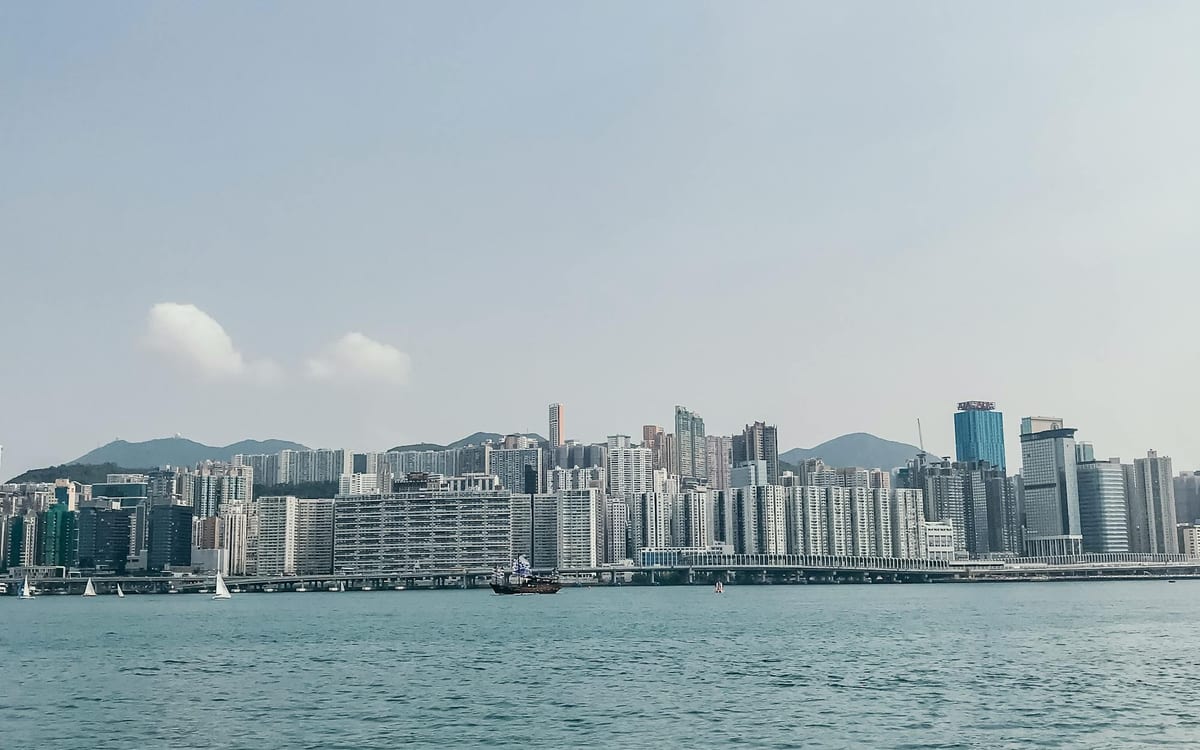
Financial-hub depth — why banking still works here
A business base is only as good as the financial plumbing behind it. This is where Hong Kong's standing as a leading global financial centre stops being an abstraction and starts being something your company uses every single day.
Practically, depth means choice and capacity. Alongside the major traditional banks, the last few years have brought a wave of digital banks and fintech platforms — multi-currency accounts, faster onboarding, payment rails built for cross-border businesses. For a foreign founder that means a real menu of ways to hold and move money, rather than a single take-it-or-leave-it option. It's also why so many international businesses still route their banking through Hong Kong: the infrastructure is genuinely deep, and it connects you to global flows and to the neighbouring mainland Chinese market.
None of that means a bank account is automatic — it never is, anywhere reputable. Opening one takes a clean, well-prepared know-your-customer (KYC) file: proof of a real business, contracts, address verification, and a clear picture of your money flows. That's precisely the part we handle — we prepare the file and introduce foreign founders to our digital and traditional banking partners. The point for stability is simpler: the system itself is robust and well-supplied. A functioning, competitive banking market is one of the clearest signals that a place remains a serious base for business.
Tax and admin simplicity
The final fundamental is cost predictability, and here Hong Kong is one of the most straightforward developed jurisdictions to budget for. Tax is simple, low, and territorial — three words that matter a great deal when you're forecasting a small company's runway.
Hong Kong taxes profits, not turnover. The rate is a two-tier profits tax: 8.25% on the first HK$2 million of assessable profits and 16.5% above that, as published by the Inland Revenue Department. There is no VAT or GST, and no capital gains tax. On top of that, the territorial principle means profits genuinely sourced outside Hong Kong may fall outside the charge — never automatically, and always subject to the IRD agreeing, but it's a real feature rather than a loophole. As for how your home country treats any of this, that depends entirely on where you're tax-resident, so confirm your personal position with a qualified advisor there; what we stand behind is the Hong Kong side.
Admin is equally undramatic. Incorporation runs in about three to five working days, and the government cost is a transparent HK$3,895 — the HK$1,545 Companies Registry electronic incorporation fee plus the HK$2,350 one-year Business Registration certificate, which includes the HK$150 levy reinstated on 1 April 2026 after a two-year waiver; you can confirm both via GovHK. After that, it's a predictable annual rhythm — an annual return, the BR renewal, and a profits-tax return with audited accounts — which we run as ongoing service. A base that's cheap to start and predictable to run is, in the most practical sense, a stable one. Our Hong Kong incorporation page lays out exactly what's included.
Who should take specialist advice — and when Hong Kong may not fit
Balance matters, so here's the honest other side. Everything above describes a standard commercial business — trading, e-commerce, consulting, services, sourcing, holding. For that broad majority, Hong Kong remains a stable, well-run base, and the fundamentals back it up. But a blanket "it's fine for everyone" would be neither true nor responsible.
If your business sits in a politically sensitive field — media and publishing, activism or advocacy, or certain tightly regulated sectors — your situation is genuinely different, and a general business article is the wrong place to settle it. The right move there is specific, qualified legal advice from a Hong Kong solicitor who can look at your exact activities. That's not a fudge; it's the correct answer for those cases, and we'll say so plainly.
For standard commercial businesses, the stability fundamentals above apply. Take specialist Hong Kong legal advice for your specific situation if your activity touches: media or publishing; activism, advocacy or politically sensitive content; or a tightly regulated sector with its own licensing regime. If that's you, we'll tell you honestly — and point you to qualified specialist counsel rather than guess.
That's the line we hold for every client: we set companies up and keep them compliant, and where a situation is genuinely sensitive or outside our lane, we tell you so and suggest specialist counsel rather than wave it through. It's also worth weighing fit on ordinary commercial grounds — if you're still deciding whether the jurisdiction matches your model at all, our guide on who a Hong Kong company is right for works through that, and our 7 myths about setting up as a foreigner clears up the practical fears that are easy to confuse with stability concerns.
If the worry behind your hesitation is really a business question, the fastest way to resolve it is a short conversation about your specific model — what you do, where your customers are, and what you actually need from a base. Speak with our Hong Kong team and we'll give you an honest read, including whether your situation is one where specialist legal advice should come first.
The Bottom Line
The concern is understandable, and it deserves a straight answer rather than a brush-off. Measured on what actually determines whether a company can operate — a US-dollar-pegged currency, free movement of capital, a common-law system with credible commercial dispute resolution, deep banking as a leading financial centre, and simple low territorial tax — Hong Kong remains a stable, well-run base for a standard business in 2026. Those are verifiable fundamentals, not opinions.
The balanced caveat is just as important: if you operate in a politically sensitive field or a tightly regulated sector, get specialist Hong Kong legal advice on your specific facts before you commit. For everyone else, we handle the incorporation, provide the company secretary and registered office, prepare your banking file, and run the annual compliance — and if your case is one of the sensitive ones, we'll tell you honestly and point you to the right counsel.