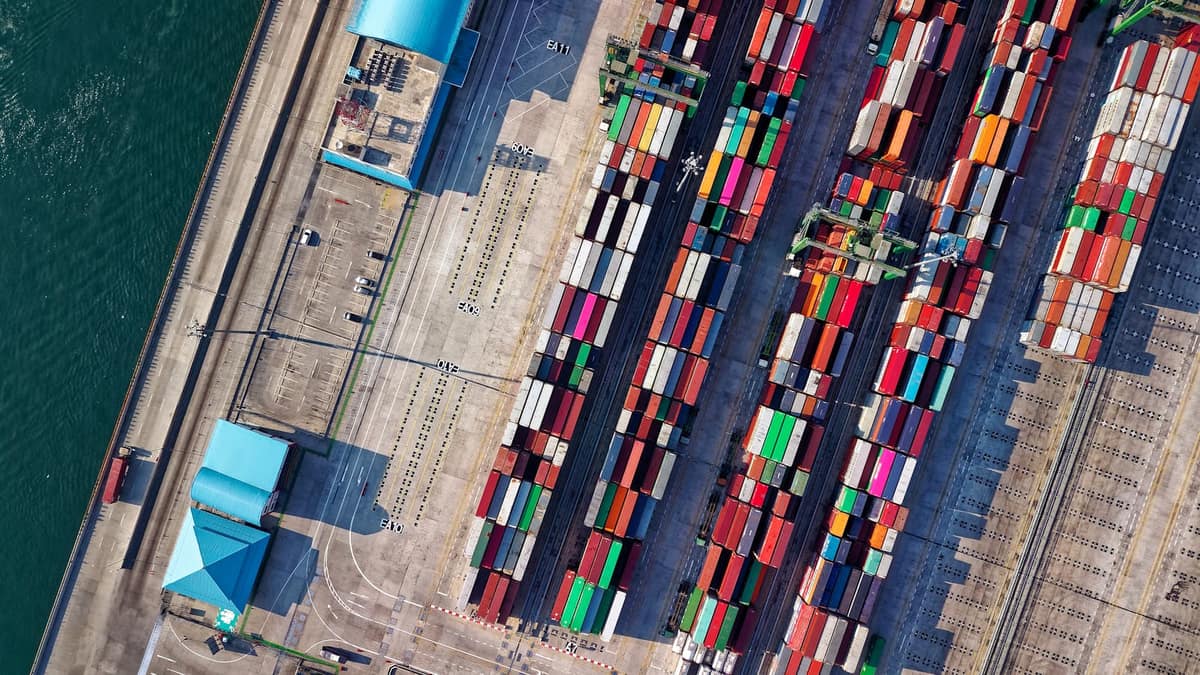
For a mainland Chinese entrepreneur ready to sell, raise, and operate internationally, a Hong Kong company is the natural gateway out: an internationally-recognised entity with multi-currency and USD banking, free capital flow within Hong Kong, a simple territorial tax system, and global credibility — all an hour from home, and set up for HK$3,895 in government fees.
If you have built something real on the mainland and now want to sell to customers abroad, invoice in US dollars, take on international investors, or simply sign contracts that counterparties in London, New York, or Dubai recognise instantly, you will quickly hit the same question every ambitious mainland founder hits: what entity do you put in front of the world? A domestic company is built for the domestic market. Going global asks for a vehicle that the global market already knows how to deal with — and for decades, the answer that sits closest to home has been Hong Kong.
Hong Kong is where "China" and "international" meet on equal terms. It runs on English common law, it speaks the language of global banking and contracts, its dollar is freely convertible, and it is an hour from Shenzhen by train. For a mainland entrepreneur, that combination is hard to beat: you get an internationally-recognised company and a credible international face for your business, in a place you can actually visit, in a culture you already understand. This guide stays firmly on the Hong Kong side of that bridge — what a Hong Kong company gives you and how we set it up. The mainland side of your structure is a separate, specialist question we flag clearly and send you to the right people for. Here is the scannable version first.
| Why Hong Kong as your global gateway | What it means for a mainland founder going global |
|---|---|
| International & USD banking | Multi-currency accounts that hold and settle USD, EUR, GBP and more — the rails global customers, marketplaces and payment processors expect. |
| Global credibility | A reputable, transparent common-law entity that international clients, suppliers and investors recognise and sign with — no "where is that?" friction. |
| Free capital flow within Hong Kong | No exchange controls inside Hong Kong: your Hong Kong company moves its own funds in and out and between currencies freely to run the international business. |
| Simple territorial tax | Profits, not turnover, taxed at 8.25% then 16.5%; no VAT/GST, no capital gains tax — easy to explain to an investor or a board. |
| Proximity & familiarity | An hour from the Greater Bay Area, Mandarin and Cantonese widely spoken, a culture and time zone you already work in — close enough to manage hands-on. |
| Access to global markets | One clean base from which to sell worldwide, plug into international payment and logistics networks, and raise from cross-border investors. |
Why Mainland Founders Look to Hong Kong When They Go Global
The instinct is correct, and it is not new. When a mainland business decides its next customers are international, it needs a face that the international market reads as one of its own. A Hong Kong private company limited by shares is exactly that: a standard, globally-understood corporate vehicle in a major financial centre, not an exotic structure that makes a foreign buyer hesitate.
The reasons stack up quickly. Hong Kong runs on English common law, so the contracts, shareholder arrangements, and dispute mechanisms are the ones international lawyers and investors already work with. It is one of the world's deepest financial hubs, so capital, banking, and professional services are all on tap. And it is right next door — for a founder in Shenzhen, Guangzhou, or anywhere in the Greater Bay Area, Hong Kong is close enough to treat as an extension of home rather than a distant offshore outpost. You can be there in person, in your own time zone, dealing in a language you speak.
Crucially, a Hong Kong company is fully open to non-resident owners. You can own 100% of it, be its sole director and shareholder, and direct it from the mainland or anywhere else. To understand whether the profile genuinely fits your plans, our guide on who a Hong Kong company is right for walks through the situations where it works best — and going global is squarely one of them.
The International Banking Advantage
For a founder selling to the world, banking is where Hong Kong earns its reputation as a gateway. A Hong Kong company can hold genuinely multi-currency accounts — settling and holding US dollars, euros, sterling, and more — which is exactly what international customers, global marketplaces, and payment processors expect to pay into and out of. Selling internationally and getting paid cleanly in the customer's currency stops being a problem and becomes routine.
The Hong Kong dollar is freely convertible and there are no exchange controls inside Hong Kong, so your Hong Kong company moves its own funds in, out, and between currencies as the business requires. Combined with the rise of digital banks and fintech platforms — names like Airwallex and Wise sit alongside the traditional banks — that means a mainland founder can run global receivables and payables through one credible base. Banking onboarding is still real work rather than a formality: the bank wants to see a genuine business with real customers or suppliers, a clear description of the money flows, and a clean know-your-customer (KYC) file. That is precisely the file we prepare, before introducing you to our digital and traditional banking partners. For the full picture of how international payments come together for a cross-border seller, our Hong Kong incorporation service is built around getting you bankable, not just registered.
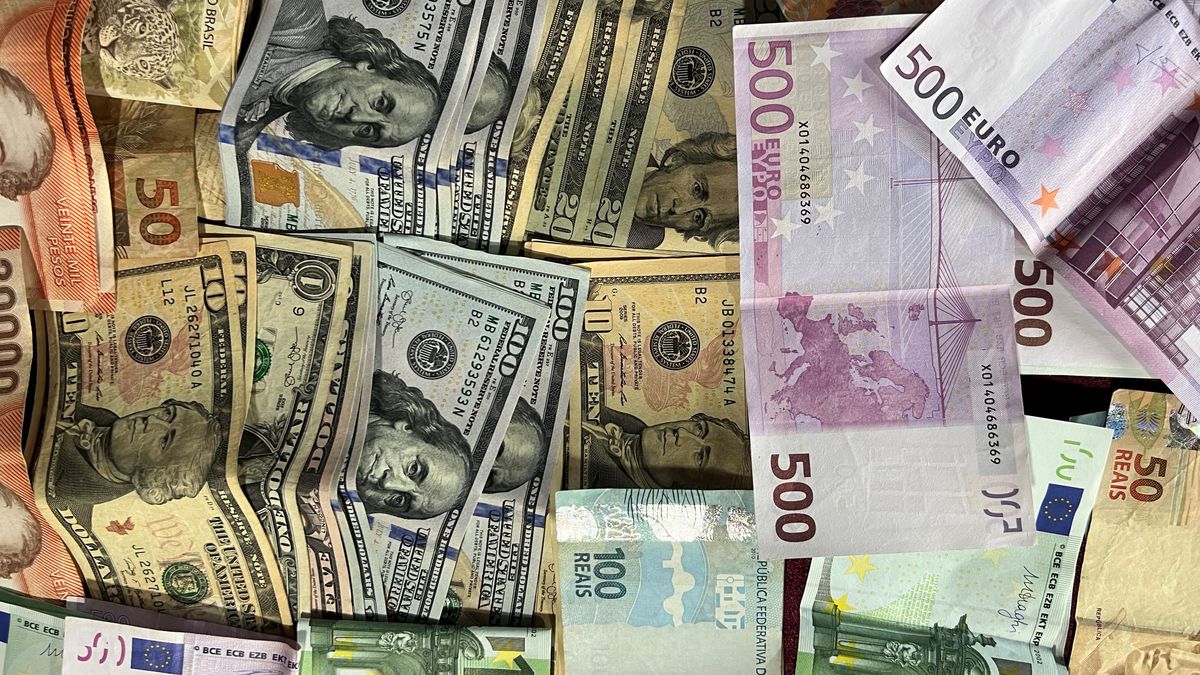
Global Credibility and Contracts
Going global is partly a banking question and partly a trust question. When a buyer in Germany, a distributor in the US, or a venture fund in Singapore looks at the entity on the other side of the contract, they make a snap judgement about how easy and safe you are to deal with. A Hong Kong company passes that test in a way that few alternatives close to the mainland do.
Part of it is the legal system: common law, enforceable contracts, and a long-established commercial court tradition mean international counterparties know where they stand. Part of it is transparency — a Hong Kong company keeps a significant-controllers register recording its ultimate beneficial owner (UBO), and the public framework is open to verify on the Companies Registry. This is the opposite of a brass-plate secrecy vehicle; it is a clean, reputable entity you can put on a master services agreement, a distribution deal, or a term sheet without anyone raising an eyebrow.
For a mainland founder specifically, that credibility is the bridge. It lets your business present internationally as an established, well-understood company, while you keep operating from where your team, your products, and your manufacturing already are. If part of your model is sourcing or producing on the mainland and selling abroad, our guide on pairing Hong Kong incorporation with China sourcing covers how that two-sided setup is commonly structured on the Hong Kong side.
Simple, Territorial Hong Kong Tax
One of the quiet advantages of a Hong Kong company is that its tax is genuinely easy to explain — to a co-founder, to an investor, to yourself. Hong Kong taxes profits, not turnover, and it does so on a territorial basis. Legitimate business costs come out before any tax is calculated.
The headline is a two-tier profits tax: 8.25% on the first HK$2 million of assessable profits and 16.5% on profits above that, as published by the Inland Revenue Department. There is no VAT or GST in Hong Kong, and no capital gains tax — two things that complicate life in many other jurisdictions and simply aren't features here. For a business going global, that simplicity is a selling point: a clean, low, predictable corporate tax that a foreign investor or board can understand at a glance.
The territorial principle adds nuance — profits genuinely sourced outside Hong Kong may, in defined circumstances, fall outside the charge — but that is never automatic; the IRD examines each claim and the Foreign-Sourced Income Exemption (FSIE) rules apply to certain income. Where it genuinely fits, we file the claim for you. What we stand behind is the Hong Kong side: how your Hong Kong company is taxed, filed, and audited. How profits and dividends are then treated in your own hands as a mainland tax resident is a separate matter — and that is the subject of the next section.
The Mainland Side: Get Qualified Local Advice
Here is the honest boundary of this guide. Everything above is about the Hong Kong company — the part we set up, run, and stand behind. The mainland side of an international structure is genuinely complex, it changes, and it is not our lane. Mainland China tax, foreign-exchange, and outbound-investment rules are intricate and specific to your situation, and you should work them through with a qualified advisor on the mainland before you build anything cross-border.
We say that plainly because it matters. Questions about how a mainland resident or a mainland company should hold, fund, or interact with an overseas entity, how cross-border flows are treated, and what filings or approvals apply on the mainland are all questions for a licensed mainland professional — an accountant, tax adviser, or lawyer who practises there and knows your circumstances. We do not advise on mainland rules, and we will never suggest ways to move money out of the mainland or work around any regulation. That is not caution for its own sake; it is the only responsible way to do this. A clean international structure is one where the Hong Kong side and the mainland side are each handled properly, by the people qualified for each.
Our role is to make the Hong Kong half excellent and to coordinate sensibly with the mainland advisor you choose. When both halves are right, the result is a structure that stands up to scrutiny from banks, investors, and authorities alike — which is exactly what going global properly requires.
Is a Hong Kong Company the Right Fit? A Checklist
A Hong Kong company is a strong gateway for a great many mainland founders going global — but it earns its keep when the profile fits. You are likely a good match if several of these are true:
- International customers or ambitions: you sell, or want to sell, to customers outside the mainland and need to invoice and get paid in foreign currencies.
- Multi-currency needs: your business handles USD, EUR, GBP or other currencies and you want one credible base to hold and settle them.
- Global credibility matters: your clients, suppliers, marketplaces or investors expect to contract with a recognised, transparent international entity.
- Raising or partnering internationally: you are taking on cross-border investors or partners who want a familiar common-law holding vehicle.
- Greater Bay Area roots: your team, sourcing or production are in or near the GBA, so Hong Kong's proximity lets you manage hands-on.
- Substance you can show: there is a real, demonstrable business behind the company — the foundation every bank's KYC review looks for.
- Willing to do it properly: you intend to pair the Hong Kong company with qualified mainland advice rather than cut corners on either side.
If most of that describes you, Hong Kong is very likely the gateway you are looking for. If you are weighing it against staying purely domestic for now, the honest first step is a conversation about your specific model — your customers, your currencies, and what banking will realistically look like for you. Speak with our Hong Kong team for a free consultation, and we will tell you candidly whether a Hong Kong company fits your plans to go global.
Our Hong Kong Package — and What It Costs
Setting up the Hong Kong company itself is fast and the government cost is modest and entirely public. A Hong Kong private limited company is typically incorporated in 3 to 5 working days, with one director and one shareholder — who can be the same person — and 100% foreign ownership.
Government cost to incorporate: HK$3,895 — HK$1,545 Companies Registry electronic incorporation fee + HK$2,350 Business Registration (incl. the HK$150 levy reinstated 1 April 2026). One transparent fee to us; no markup on government rates.
That HK$3,895 is the HK$1,545 Companies Registry (CR) electronic incorporation fee plus the HK$2,350 one-year Business Registration (BR) certificate, which includes the HK$150 levy that was reinstated on 1 April 2026 after a two-year waiver. Our incorporation package covers all of it — and the two things Hong Kong law requires for a real local footprint, a Hong Kong-resident company secretary and a registered office address, are included from day one. We file the incorporation with the CR and IRD on your behalf; we never mark up the government rates.
Where founders should plan ahead is the ongoing rhythm rather than the setup: the annual BR renewal, the company secretary and registered office, and accounting plus a Hong Kong audit. We run all of that as ongoing service — including the realities every non-resident founder should know before incorporating — so the compliance calendar is ours to watch, not yours. You decide the company name, the shareholding, and the business model; we handle the filings and the banking introductions and coordinate cleanly with your mainland advisor.
The Bottom Line
For a mainland Chinese entrepreneur going global, a Hong Kong company is the natural gateway out: an internationally-recognised, common-law entity with multi-currency and USD banking, free capital flow within Hong Kong, a simple territorial tax of 8.25% and 16.5% with no VAT or capital gains tax, and global credibility — set up in 3 to 5 days for HK$3,895 in government fees, an hour from the Greater Bay Area.
The one rule to hold onto is that an international structure has two halves. We make the Hong Kong half excellent — incorporation, company secretary and registered office, banking introductions, and ongoing compliance — and your mainland tax, foreign-exchange, and outbound-investment questions belong with a qualified advisor on the mainland. Get both halves right, and you have a clean, credible base from which to sell, raise, and operate anywhere in the world.