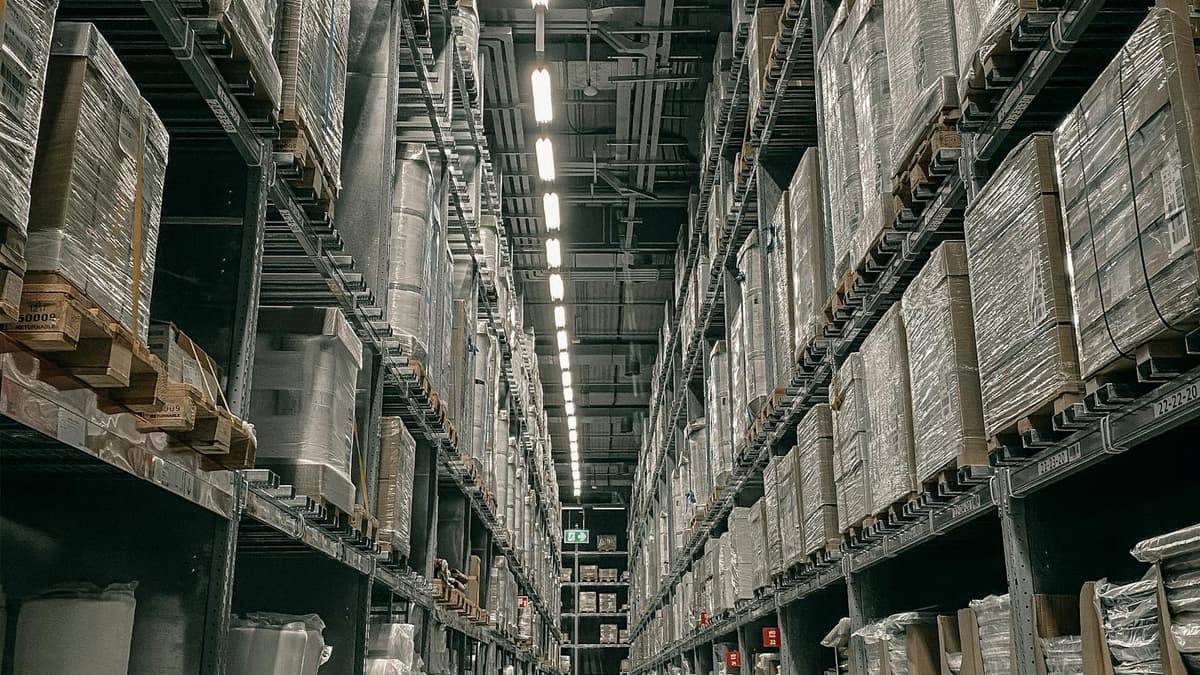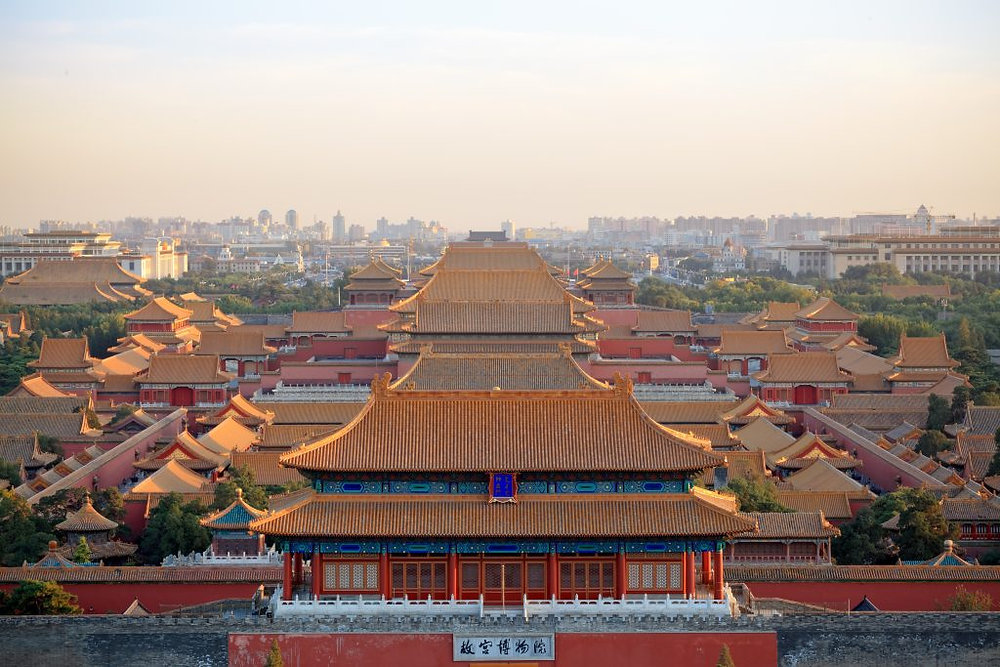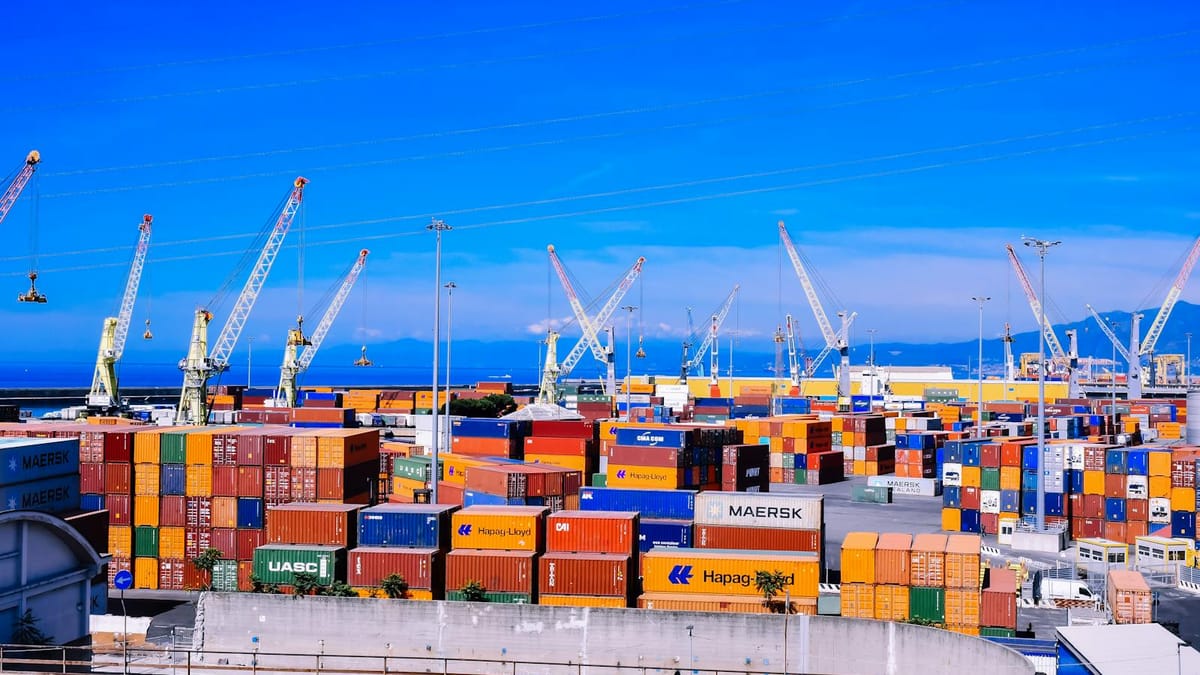
The Greater Bay Area — Hong Kong, Shenzhen and the rest of Guangdong, plus Macau — bundles the factories, the deep-water port and a global air-cargo hub into one tight cluster. For a trader sourcing physical goods, a Hong Kong company sits at the centre of it as the contracting and banking hub. This is the structural case, kept practical and durable.
If you trade physical goods out of southern China, you are already operating inside the Greater Bay Area (GBA) whether or not you call it that. Your factory is in Guangdong, your goods move through a regional port or airport, and your money and contracts need a stable, well-regulated home. The GBA is the name for that cluster: Hong Kong, Shenzhen and the wider Guangdong manufacturing belt, and Macau — eleven cities that sit within a few hours of each other.
This post is the structural view we walk traders through. It is deliberately qualitative: not a forecast of any single 2026 policy or tariff, but a durable look at why the GBA is a logistics advantage and why a Hong Kong company is the natural anchor for it. We will cover what the cluster gives a small trader, Hong Kong's role as the connectivity and financial hub, what your company actually does in this chain, what to weigh in 2026, when the setup fits, and how we handle the Hong Kong side.
Why the Greater Bay Area Matters for a Small Trader
The GBA's advantage for a one- or two-person trading business is not abstract economics — it is the compression of your entire supply chain into a short radius. The recurring reasons it helps the traders we work with:
- Factories at close range: the Guangdong manufacturing belt is one of the densest concentrations of light-goods production in the world, so sourcing, sampling, and re-orders happen across a short distance rather than across oceans.
- Several gateways, one region: a deep-water container port and a leading international air-cargo airport sit within the cluster, so you can match sea freight for bulk and air freight for speed without leaving the area.
- Short lead times on iteration: because the factory and the freight gateways are close together, the loop from "approve the sample" to "goods on a vessel" is tighter than a chain spread across multiple countries.
- One trade cluster, complementary strengths: manufacturing scale on the mainland side and finance, logistics coordination, and contracting on the Hong Kong side — each city plays to its strength.
None of this requires you to be physically present. It does, however, reward having a credible corporate base that the rest of the chain — suppliers, freight forwarders, banks — recognises and trusts. That base is where a Hong Kong company for China sourcing earns its place.
Hong Kong's Role as the Connectivity Hub
Within the GBA, Hong Kong's specific contribution is connectivity — physical and commercial. It is a free port with a long-established container terminal and one of the busiest international cargo airports in the world, and it sits directly alongside the mainland manufacturing base. For a trader, that translates into practical reach:
- Sea and air in one place: bulk goods can move by container through the port while time-sensitive or high-value items go by air — both from the same metropolitan area.
- A free-port tradition: Hong Kong's status as a free port and its open trade posture make it a familiar, low-friction transit and contracting point for international counterparties.
- Proximity without being inside the mainland system: Hong Kong is adjacent to Guangdong yet operates its own legal, currency and customs systems — useful when you want closeness to the factory and a separate, internationally-recognised contracting jurisdiction.
- A forwarder and trade-services ecosystem: freight forwarders, inspection agents, and trade-finance providers cluster here, so the support around your shipments is mature.
The mainland-side rules — how goods clear customs into and out of Guangdong, what mainland documentation or tax applies — sit firmly outside Hong Kong's lane and change with mainland policy. Treat those as a question for a qualified advisor on the mainland; confirm your exact import, export and customs requirements with a local professional there rather than assuming they mirror Hong Kong.

The Financial and Contracting Hub
Logistics is only half of a trading business; the other half is contracts and money, and this is where Hong Kong does its quietest, most important work. A Hong Kong private limited company is a separate legal entity that signs in its own name, banks in its own name, and is recognised internationally as a real counterpart. For a GBA trader that means:
- A clean contracting party: your purchase orders with suppliers and your sales contracts with overseas buyers are signed by one recognised company, not a personal name or an opaque shell.
- Multi-currency banking: a Hong Kong business account can receive and hold the major trade currencies, so you pay suppliers and get paid by buyers without forcing a conversion on every transfer.
- Trade-finance access: when your KYC profile and trading history support it, Hong Kong banks are set up to consider instruments traditional traders rely on, such as Letters of Credit (a bank's guarantee that a supplier gets paid once shipping conditions are met).
- A familiar legal system: Hong Kong's common-law framework and its profits-tax regime are well understood by international buyers, suppliers, and banks — which lowers friction at every signature.
On tax, the Hong Kong side is straightforward and worth stating plainly. A Hong Kong company pays a two-tier profits tax: 8.25% on the first HK$2 million of assessable profits and 16.5% above that, per the Inland Revenue Department. Tax is on profit, not turnover, and Hong Kong's territorial source principle means profits genuinely arising outside Hong Kong may fall outside the charge — but the IRD examines any offshore claim carefully and it is never automatic. We file it only where it genuinely fits.
What a Hong Kong Company Gives You in This Supply Chain
Put the connectivity and the contracting together and the role of the company becomes concrete. In a GBA trading chain, the Hong Kong entity is the hub the goods, contracts, and cash all route around:
- The contracting hub: it buys from your Guangdong (or wider Asian) suppliers and sells to your global buyers, so a single recognised company stands on both sides of the trade.
- The banking hub: marketplace and buyer payments land in its multi-currency account, and supplier payments go out from the currency you already hold — fewer conversions, tighter spreads.
- The credibility layer: a registered company with a matching business account and a real registered office is the profile banks, forwarders, and large buyers are set up to deal with.
- A vehicle that scales: as your volume grows, the same company carries more trade — there is no domestic micro-business ceiling to outgrow.
For the deeper case on pairing a Hong Kong company with the rest of a cross-border seller's stack, our Amazon FBA multi-marketplace payouts playbook maps how payouts consolidate and suppliers get paid from one controllable balance.
Practical Supply-Chain Considerations for 2026
The structural case is durable; the things to actively manage shift year to year. Without forecasting any single policy or rate, these are the qualitative questions worth keeping in front of you in 2026:
- Diversification of sourcing: many traders are spreading orders across more than one factory or region for resilience — your Hong Kong company can contract with multiple suppliers cleanly, wherever they sit.
- Mode mix, sea versus air: the balance between cheaper sea freight and faster air freight is a live decision per product and season; the GBA lets you switch without relocating your base.
- Currency exposure: trading across RMB, USD and your buyers' currencies creates FX risk, which a multi-currency account helps you hold and time rather than convert reflexively.
- Documentation discipline: keeping invoices, shipping documents, and contracts clean under one company makes both your annual audit and any offshore claim far easier — see our accounting and audit service for how we keep this tidy.
- Mainland requirements move: customs, mainland tax, and any cross-border schemes change on the mainland side — always confirm the current position with a qualified advisor in mainland China rather than relying on last year's understanding.
The pattern across all of these: keep the Hong Kong side clean and well-documented, and treat the mainland side as a separate question for local mainland professionals.
When This Setup Fits
A Hong Kong company anchoring a GBA supply chain earns its keep for a specific kind of trader. The patterns where it consistently pays off:
- You source physical goods from Guangdong or elsewhere in Asia and sell to buyers in other countries.
- You are paying suppliers and getting paid by buyers in more than one currency, so consolidating flows saves real margin.
- You want a recognised contracting party for purchase orders and sales contracts, and possibly access to trade-finance instruments down the line.
- Your volume has outgrown trading in a personal name or a sole proprietorship, and mixing business and personal money has become a liability.
And the honest other side — hold off if you are too early. If you are still placing one-off small orders, selling into a single domestic market, with no multi-currency flows and no need for a formal contracting party, the annual running cost (company secretary, audit, accounting, renewals) can outweigh the benefit. A paper-only shell helps no one, and we will not set one up. For the step-by-step view of standing the company up once it does fit, see our 10-Day Hong Kong Company Setup Playbook.
What Our Package Covers
Once a Hong Kong company is the right anchor for your supply chain, we run the whole Hong Kong side on a single workflow so you stay focused on sourcing and selling:
- All Hong Kong government fees — HK$3,895 at incorporation (HK$1,545 Companies Registry electronic incorporation fee plus the HK$2,350 one-year Business Registration Certificate (BR), which includes the HK$150 Levy reinstated on 1 April 2026 after a two-year waiver). One transparent fee to us; no markup on government rates.
- Incorporation in 3–5 working days, with Forms NNC1 and IRBR1 filed by us with the Companies Registry and the Inland Revenue Department (IRD).
- Registered office address in Wan Chai and the statutory company secretary role — included from day one, no separate engagement.
- Banking introductions: we assemble the application package and introduce you to our digital and traditional banking partners for the multi-currency account that pays your suppliers and receives buyer payments.
- Annual cadence handled for you: the Annual Return (NAR1) filed within 42 days of your incorporation anniversary, BR renewal (currently HK$2,350 per year, no markup), and the Profits Tax Return prepared with the offshore claim where it genuinely fits.
- In-house Hong Kong incorporation and accounting teams, so monthly bookkeeping across your trade keeps the first-year audit a non-event.
If you trade through the Greater Bay Area and want your Hong Kong base set up properly, the right first step is a 30-minute call to map your supply chain and confirm the structure fits. We will look at your suppliers, your buyers, your currencies, and your volume, and tell you honestly whether it's "now" or "not yet." Speak with our Hong Kong team — we run this conversation with traders regularly.
The Bottom Line
The Greater Bay Area's logistics advantage is structural and durable: factories, a deep-water port, and a global air-cargo hub clustered within a short radius, with Hong Kong sitting at the centre as the connectivity, contracting, and banking hub. For a trader sourcing from China, a Hong Kong company is the natural anchor — a recognised counterparty for your contracts, a multi-currency home for your money, and a credible base the rest of the chain trusts.
What changes year to year is the detail — sourcing diversification, the sea-versus-air mix, currency exposure, and especially mainland-side rules, which you should always confirm with a qualified advisor in mainland China. What stays constant is the value of a clean, well-documented Hong Kong company under it all. When the setup fits, we handle the incorporation, the banking introduction, and the ongoing accounting — so you can keep your supply chain moving.